 English
 中文简体
 русский
 日本語
Home / Newsroom / Industry News / Cylinder Bore Turning and Milling Composite Center: A Practical Shop Guide
Industry News
 Email: cnc88max@dingtalk.com
 Phone: +86-18021988367
Cylinder bores are unforgiving. A few microns of taper, a poor surface finish, or a bore that is not square to the deck can turn a good casting into scrap. Shops that machine engine blocks, liners, hydraulic cylinders, and compressor housings know this well. The work usually moves from lathe to milling machine to jig borer, with a re-chuck between each step. A cylinder bore turning and milling composite center changes that sequence. It brings boring, turning, facing, milling, drilling, and tapping into one enclosure and, just as important, one setup. This guide looks at what these machines do, where they earn their keep, and how to judge one without getting lost in brochure specs.
Content
At its simplest, a cylinder bore turning and milling composite center is a CNC machine built around a rotating workpiece and a tool package that can both turn and mill. The main spindle holds the cylinder block, liner, or housing. A boring bar or turning tool removes material from the bore. Live tooling, often on a turret or a second spindle, takes care of facing, port milling, spot drilling, and tapping. Some designs add a B-axis or a second spindle to reach angled features and the opposite end of the part.
The practical result is fewer trips across the shop floor. Instead of boring on one machine, then unclamping and milling a flange on another, the operator keeps the part in one fixture. That matters because every re-clamp introduces a new chance for error. The bore may no longer be parallel to the face, or the port may not line up with the bore centerline. A composite center reduces those chances by keeping the part still while the tool changes. It also shortens queue time. For a shop that handles mixed batches, that can be as valuable as the cycle time itself. If you want a closer look at a purpose-built cylinder bore turning and milling composite center, the machine layout tells you a lot about how the builder expects the work to flow.
Bore geometry is a chain of small decisions. Tool deflection, spindle thermal growth, clamping force, and chip evacuation all leave a mark. When a part is moved between machines, the operator has to re-establish the same datum. Sometimes that is straightforward. Sometimes it is a shim, a soft hammer, and a dial indicator at 6 a.m. One-setup processing removes much of that ritual. The bore can be roughed, semi-finished, and finished without losing its relationship to the deck face, main bore, or mounting flange.
For cylinder work, the payoff shows up in roundness, straightness, and surface finish. It also shows up in the way the part sounds and wears in service. A bore that is slightly out of round may still pass a plug gauge, but it can cause ring seating problems or uneven oil film. A composite center does not fix a poor process by itself. It does, however, make a good process easier to repeat. The operator can use probing to set the bore center, measure the tool, and adjust offsets before the finish pass. The same setup can mill a port or spot-face a sensor pad without waiting for a second machine. That is the quiet advantage: not one dramatic gain, but fewer small errors stacked on top of one another.
Cylinder bore work is not just boring. A typical sequence may start with face milling, then center drilling, rough boring, finish boring, grooving, and chamfering. Ports, oil galleries, and mounting holes often need milling and tapping. A composite center handles this mix by changing tools from a turret or tool magazine while the part stays clamped. Tooling choices matter more than the brochure's list of axes. A rigid boring bar with a fine adjustment head gives the operator control over the last few hundredths of a millimeter. Through-tool coolant helps clear chips from a deep bore, but the pressure and volume need to match the bar diameter. For finish boring, a sharp insert and a stable setup are usually more important than a high spindle speed. The table below compares common operations with the demands they place on the machine.
| Operation | Typical requirement | Why it matters |
|---|---|---|
| Rough boring | High torque and a rigid bar | Removes cast skin and stock without chatter |
| Finish boring | Fine feed and thermal stability | Controls roundness, taper, and surface finish |
| Face milling | Strong axial stiffness | Keeps the deck square to the bore |
| Port milling | Live tooling and interpolation | Shapes ports without a second setup |
| Drilling and tapping | Synchronized spindle | Avoids thread pitch errors in blind holes |
A composite center is a system, not a single specification. Three areas deserve a place on your evaluation sheet.
The spindle and the machine bed set the limit on what the tool can do. Look for a rigid base, generous guideway support, and a spindle that can hold torque at the low speeds used for boring. Damping matters as much as stiffness. A machine that rings during an interrupted cut will struggle to hold a finish. Ask for a test cut on a part similar to yours, not a demo block.
Boring is sensitive to heat. A spindle that grows during the shift will change the bore size, even if the tool does not wear. Probe routines, spindle warm-up programs, and temperature compensation help, but the operator needs a clear procedure. The control should make tool offsets and bore measurements easy to enter and verify. If the machine has a touch probe or in-process gauging, check how the data is used. A measurement that nobody acts on is just decoration.
Deep bores trap chips. The machine needs enough coolant pressure at the tool tip, plus a way to flush the fixture between parts. Chip conveyors and tank capacity are not glamorous, but they decide whether the operator spends the shift boring or scooping. For cast iron, dry or minimum-quantity lubrication may be appropriate, but the choice depends on the operation and the shop's air quality rules. Do not copy a coolant strategy from a different material.
Machine size should follow the part envelope, not the other way around. A compact engine block and a long hydraulic cylinder have different needs. The block may favor a dual-spindle layout that can work both ends, while a long cylinder may need a steady rest and a large through-bore. The series structure below is a useful starting point, but the real test is a drawing review. Bring your part, your tolerance, and your annual volume. A builder who asks about fixturing and inspection is usually more helpful than one who only quotes a price.
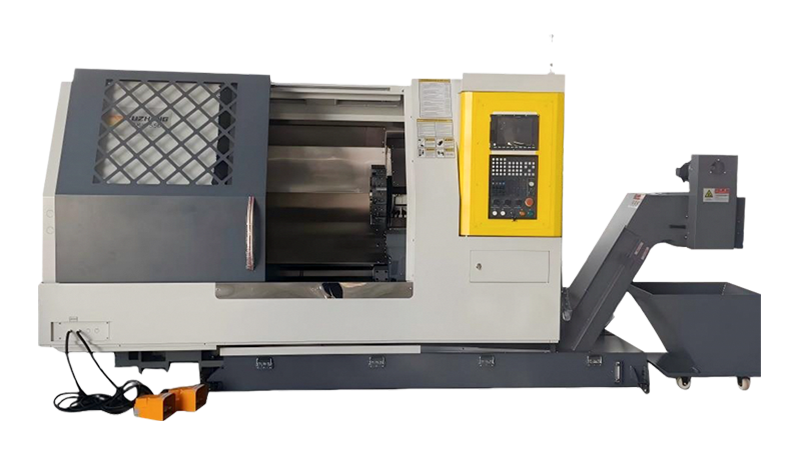 CKD Series Standard Dual-Spindle Turning and Milling MachineA standard dual-spindle turn-mill platform for repeatable precision work and reduced re-clamping, worth reviewing when your part mix is predictable.View Product →
For shops that need a standard, repeatable platform, the CKD series standard model dual-spindle turning and milling machine is aimed at predictable work. When the part mix includes special ports, angles, or non-standard clamping, the CKX series customizable dual-spindle turning and milling machine offers more room to specify the layout.
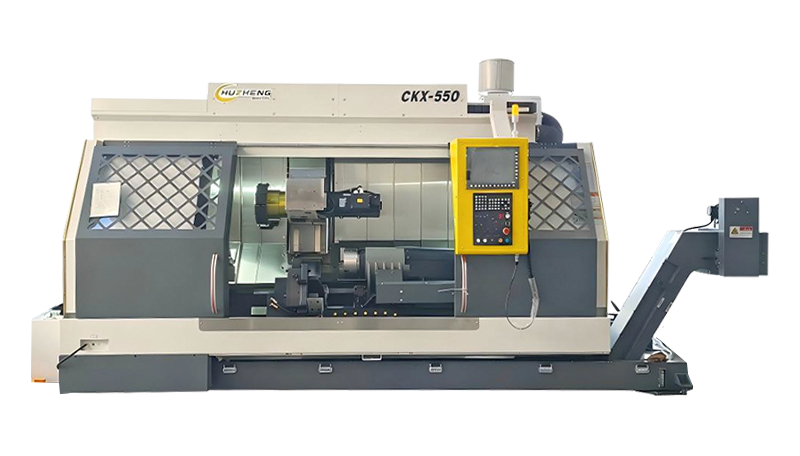 CKX Series Customizable Dual-Spindle Turning and Milling MachineA customizable dual-spindle turn-mill option for parts with special ports, angles, or non-standard clamping; compare it when standard layouts do not fit.View Product →
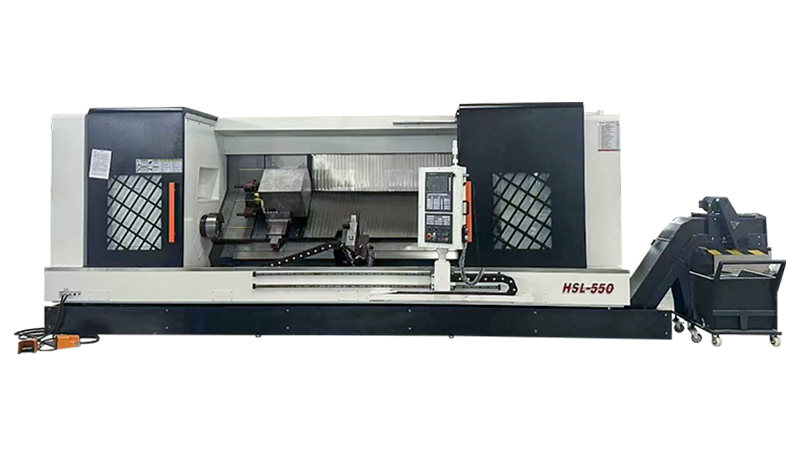
Heavy castings and large cylinders put different demands on the structure, which is where the HSL series heavy-duty dual-spindle turning and milling machine comes in. The right choice is the one that fits the parts you actually run, not the biggest machine in the catalog. If you are still comparing layouts, this turning and milling composite solution overview can help you frame the decision.
Even a good machine can make bad parts if the fixture is weak. Cylinder blocks are awkward shapes. They have thin walls, uneven casting stock, and features that invite vibration. A fixture should support the part near the bore and clamp without distorting the bore. Torque-controlled clamping is better than a long pipe on a wrench. For thin-wall liners, a mandrel or a conformal support may be needed.
The first article deserves extra time. Indicate the bore, check the face relationship, and record the offsets. Then run a small batch and measure at the same temperature. If the bore drifts, check the tool wear, the coolant, and the spindle warm-up before changing the program. Keep a log. A composite center gives you many variables, and a log turns guesswork into a process. Operators also need a clear rule for when to stop and probe. Measuring every part may be unnecessary; measuring the first, the last, and a few in between often catches drift early.
Use this checklist to keep a machine comparison grounded:
A machine that scores well on all eight is worth a second visit. A machine that wins on price but fails items two and eight is not a bargain.
Cylinder bore work rewards consistency. The best cylinder bore turning and milling composite center is not the one with the longest list of axes. It is the one that keeps the part still, keeps the tool sharp, and keeps the operator informed. When boring, facing, milling, and tapping happen in one setup, the shop gains more than cycle time. It gains a process that is easier to inspect and easier to repeat. Start with your part drawing. Then look at the machine structure, the thermal routine, and the chip management. If those match, the rest of the specification sheet becomes much easier to read.

Copyright © Xuancheng Huzheng Machinery Trading Co., Ltd. Rights Reserved.