
 English
 中文简体
 русский
 日本語
Home / Newsroom / Industry News / Cylinder Bore CNC Turning and Milling Machines: A Practical Shop Guide
Industry News
 Email: cnc88max@dingtalk.com
 Phone: +86-18021988367
Anyone who has bored a cylinder knows the job rarely stops at the bore. There is a face to true up, a chamfer to cut, a groove for an O-ring, an oil hole to drill, and sometimes a flat to mill so a fitting clears. Move that part from a boring bar to a mill and back again, and every re-clamp gives the geometry another chance to drift.
That is the gap a cylinder bore CNC turning and milling machine is built to close. Instead of handing the workpiece between two machines, the part stays clamped once while the spindle rotates it and live tooling mills, drills and slots on the same platform. For shops that turn out cylinders, liners, hydraulic bodies and similar round parts, that single change often removes more error than any control upgrade.
Content
Strip away the catalog language and the concept is straightforward: a turning platform that also carries a powered tool spindle, usually with a C-axis to position the part angularly and a Y-axis to move the tool off centre. The main spindle turns the workpiece; driven tools cut flats, keyways, ports and cross holes without the part ever leaving the chuck or fixture.
Bores can be produced in two different ways on the same machine. Single-point boring with a bar fed along the axis gives the best control over roundness and size, and it is still the standard method for finishing a cylinder. Helical milling with an end mill orbiting the bore axis is the other route: it suits large diameters, interrupted cuts and bores that need ports or windows broken into them. Having both approaches available, and being able to switch between them without re-indenting the part, is where a purpose-built cylinder bore CNC turning and milling machine earns its place.
The honest difference from a dedicated boring machine is not that the boring itself is better. A rigid machine with a good boring bar is hard to beat for pure bore work. The difference is that the boring, the facing and the milling all share one datum, so the face is square to the bore, the groove is concentric and the cross hole lands where the drawing says it should.
| Operation | Typical tooling | What single-setup clamping buys you |
|---|---|---|
| Rough boring | Indexable boring bar or helical milling | Stock cleared without a second fixture |
| Finish boring | Adjustable bar with fine feed | Size and roundness held to the same datum as the face |
| Facing and decking | Facing tool or face mill | Face square to the bore axis |
| Chamfer and groove | Form tool or grooving insert | Concentric features cut without re-chucking |
| Cross drilling and milling | Driven tools with Y-axis | Holes and flats positioned from the same zero |
Not every shop needs this configuration. It makes the most sense where a round part carries features that would otherwise require a second operation, and where the tolerance between the bore and those features matters in service rather than just on the inspection report.
For repeat work in a mid-size range, a standard dual-spindle platform is usually the level-headed starting point. Both ends can be worked, features stay referenced to one another, and the machine does not carry cost you will never use.
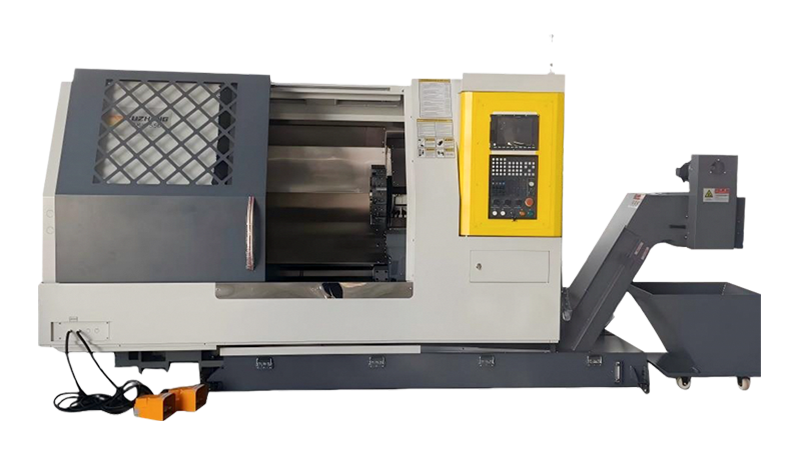 CKD Series Standard Dual-Spindle Turning and Milling MachineA standard dual-spindle turn-mill center for repeat mid-size parts, machining both ends in one cycle when work is routine and volumes are steady.View Product →
If your bores are routine and your volumes steady, that kind of machine quietly does the job for years. The complexity starts when the parts stop being routine.
Start with the extremes you actually expect, not the average job. Maximum bore diameter and depth decide the bar you can hang out of the turret; the swing and the spindle through-hole decide whether the part can be held at all. A deep bore on a small bar is a deflection problem, and no control feature compensates for a bar that bellies in the cut.
Liner seats, ports and cast surfaces produce interrupted cuts that hammer the edge. Blind bores are the opposite problem: the bar has to stop cleanly and the corner has to be square without chattering into the shoulder. Both scenarios reward a machine with a heavy, well-damped structure, and both punish a builder who saved weight in the bed.
Boring produces a lot of chip in a small space. Through-tool coolant and a generous flood aimed at the cut keep the bore clear; good chip control is the difference between a repeatable finish and a scrapped part at the last pass. Ask how many driven tool stations are available and whether the turret can hold the boring bars you already own.
Where the parts are unusual, a customizable platform lets you set stroke, tooling and control options around the work rather than bending the work around the machine.
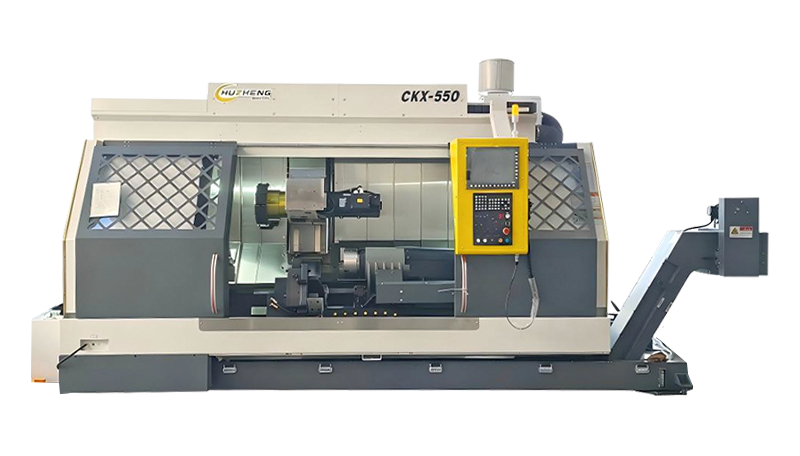 CKX Series Customizable Dual-Spindle Turning and Milling MachineA customizable dual-spindle turn-mill platform for unusual parts, letting stroke, tooling and control options be set around the work.View Product →
Two shops can run the same machine and get different results. Most of the difference sits in the setup, not in the specification sheet.
These are ordinary habits, and they matter more than most options lists. Good multi-process composite machining is mostly disciplined sequencing performed on a capable platform.
Our own range is organised around one technology rather than a spread of machine types, which keeps the comparison simple. All three families are dual-spindle turning and milling machines; the difference is how much of the platform is fixed and how much is built around your parts.
| Family | Positioning | Typical fit |
|---|---|---|
| CKD series | Standard model dual-spindle turning and milling machine | Steady repeat work; predictable bore sizes and volumes |
| CKX series | Customizable dual-spindle turning and milling machine | Unusual bore depths, tooling packages or control requirements |
| HSL series | Heavy-duty dual-spindle turning and milling machine | Large, heavy or interrupted bores that demand mass and damping |
When the workpiece grows past a certain size, mass stops being a preference and becomes a requirement. Heavy castings, thick-walled sleeves and large flanges all want a bed that absorbs the cut instead of ringing with it.
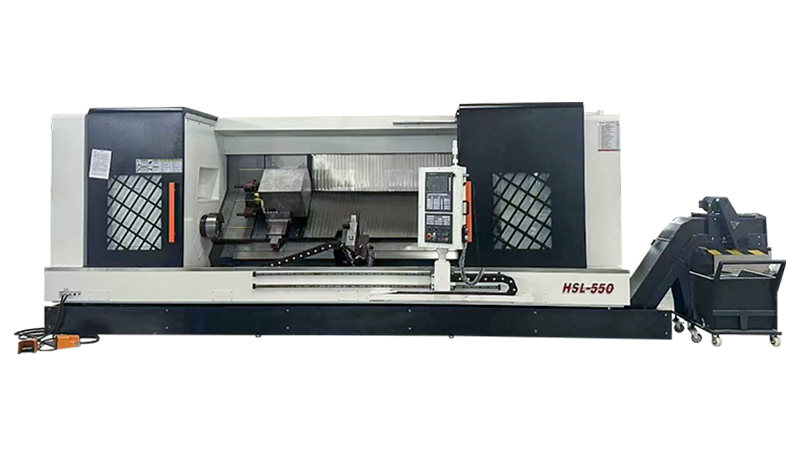 HSL Series Heavy-Duty Dual-Spindle Turning and Milling MachineA heavy-duty dual-spindle turn-mill machine for larger, heavier workpieces that need a bed to absorb the cut rather than ring.View Product →
The right answer is usually the smallest machine that comfortably covers your heaviest realistic part, with a little headroom for the job you have not been asked for yet.
We have spent years working on turning and milling technology and nothing else, which is a narrow way to run a machine tool business and a useful one for customers. It means the engineers talking to you about a bore have probably stood beside a machine cutting one, and that the spare parts held in stock belong to the machines you actually own.
If you are weighing up a cylinder bore project, send us the drawing and the volumes. A straight answer about whether a turn-mill platform suits the work, and which configuration makes sense, is more useful than a quotation nobody asked for.

Copyright © Xuancheng Huzheng Machinery Trading Co., Ltd. Rights Reserved.

