
 English
 中文简体
 русский
 日本語
Home / Newsroom / Industry News / Cylinder CNC Turning and Milling Machines: A Practical Shop Guide for Real Work
Industry News
 Email: cnc88max@dingtalk.com
 Phone: +86-18021988367
Cylinder work rarely fails because a shop lacks a lathe or a mill. It fails at the handoff between them. A bore is turned, a face is milled, ports are drilled, and by the time the part comes back for a finish pass, the setup has shifted just enough to matter. A cylinder CNC turning and milling machine is one practical answer to that problem: it brings turning, milling, drilling, and tapping into a single setup so the bore and the features around it stay related to one another.
Content
You will see the same idea under several names: turning and milling composite center, turnmill machining center, or cylinder CNC turning and milling machine. The basic principle is consistent. The workpiece turns, live tools cut off-axis features, and the control keeps both operations in the same coordinate system. Depending on the machine, a C-axis, a second spindle, or a lower turret may add more capability, but the shop-floor benefit is easier to explain than the hardware list: fewer setups mean fewer chances for the bore and its surrounding features to drift apart.
For cylinder parts, the important relationships are usually bore to face, bore to port, bore to mounting flange, and bore to groove. A dedicated cylinder bore turning and milling machine is built around those relationships rather than around a single operation. That is why combined machining tends to make the most sense when a part has a bore plus milled pads, cross holes, oil passages, relief grooves, or a flange pattern that must stay aligned.
Cylinder-shaped work appears in more places than many new machinists expect. The common thread is not the industry name; it is the need to hold a round feature and a set of adjacent features in one controlled process.
In each case, the question is not simply “Can this machine turn a bore?” The better question is: “Can it finish the bore and the nearby features without breaking the setup?” If the answer is yes, the process usually becomes shorter and more predictable.
Our own product line stays focused on turning and milling composite technology, which makes the selection conversation more direct. In plain terms, we look at part size, bore depth, feature count, part weight, and how often the job repeats. The table below is a simple starting point, not a substitute for a drawing review.
| Series | Typical fit | Questions to settle |
|---|---|---|
| CKD standard model dual-spindle turning and milling machine | Repeatable cylinder families with stable drawings and moderate feature requirements. | Chuck size, bore depth, feature tolerance, and whether the second spindle removes a real operation. |
| CKX customizable dual-spindle turning and milling machine | Cylinders with ports, grooves, tapers, or fixture needs that change from family to family. | Which options are fixed, which are part-specific, and how tool access changes at the bore end. |
| HSL heavy-duty dual-spindle turning and milling machine | Large or heavy cylinder bodies where handling, rigidity, and stable cutting dominate. | Part weight, lifting method, spindle load, bed length, and the inspection plan for a large bore. |
When a shop has a stable family of cylinder parts, the best machine is often the one that makes the repeatable case boringly reliable. That is where the CKD series fits. It is aimed at standard dual-spindle turning and milling work, and the practical appeal is not a long feature list; it is the ability to keep the same setup logic, tool plan, and inspection routine from job to job. For a shop that quotes similar cylinder bodies every month, that consistency is worth more than extra flexibility that never gets used.
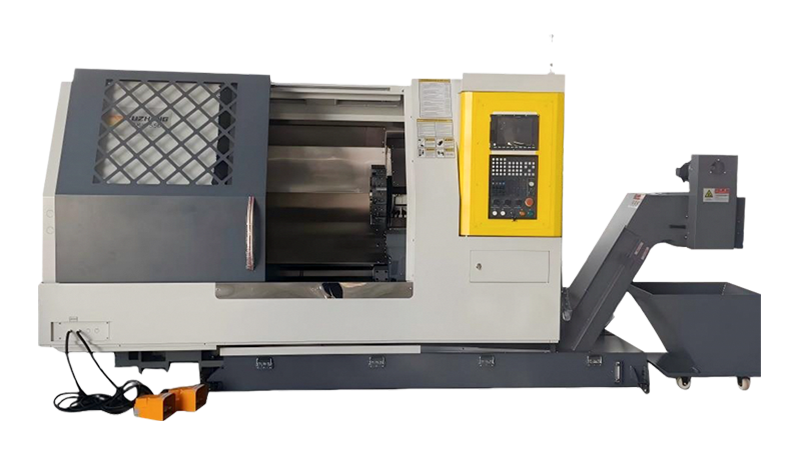 CKD Standard Dual-Spindle Turning and Milling MachineA standard dual-spindle turn-mill platform for repeatable cylinder families, combining turning, milling, drilling, and tapping in one setup.View Product →
The key is to be honest about the part family. If the bore size, depth, flange pattern, and port locations move within a known range, a standard model can be the cleaner choice. If every new order brings a different groove or an awkward milled pocket, the standard case weakens quickly.
Customization is not automatically better. It earns its place when the part demands it. A cylinder with a deep bore, an interrupted face, a cross-port pattern, or a clamping requirement that changes between families may need a different tool arrangement, a different workholding approach, or a different spindle configuration. That is the reason the CKX series exists: it gives the selection process room to match the machine to the work instead of forcing the work into a fixed package.
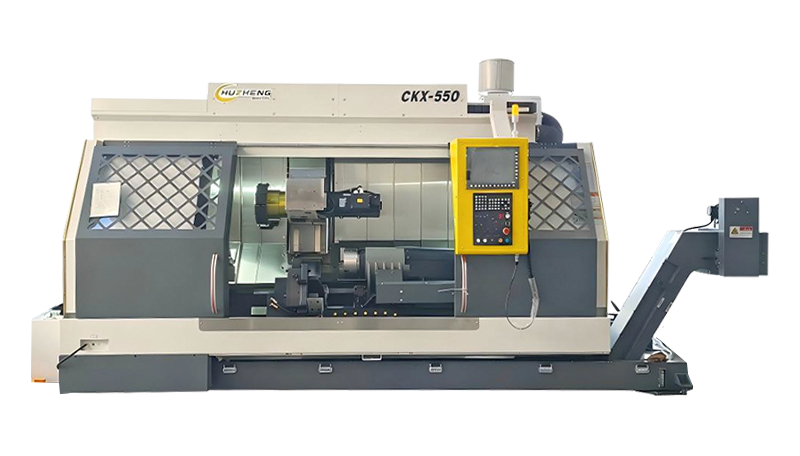 CKX Customizable Dual-Spindle Turning and Milling MachineA customizable dual-spindle turn-mill option for parts that need different tool, workholding, or spindle arrangements to fit the process.View Product →
In our experience, the useful customization conversation starts with the part drawing and the process plan, not with a wish list. Which feature is causing the second setup? Where does the tool need to reach? Is the limiting factor bore depth, part diameter, part weight, or chip evacuation? Once those answers are clear, the machine configuration becomes much easier to defend.
Large cylinder work changes the priorities. A heavy part is harder to handle, harder to clamp consistently, and less forgiving of a light machine structure. The cutting forces may not be extreme, but the part weight, the overhang, and the need to hold a true bore over a long distance all push the selection toward a heavier platform. The HSL series is intended for that kind of work: heavy-duty dual-spindle turning and milling where rigidity and stable part handling matter as much as the control features.
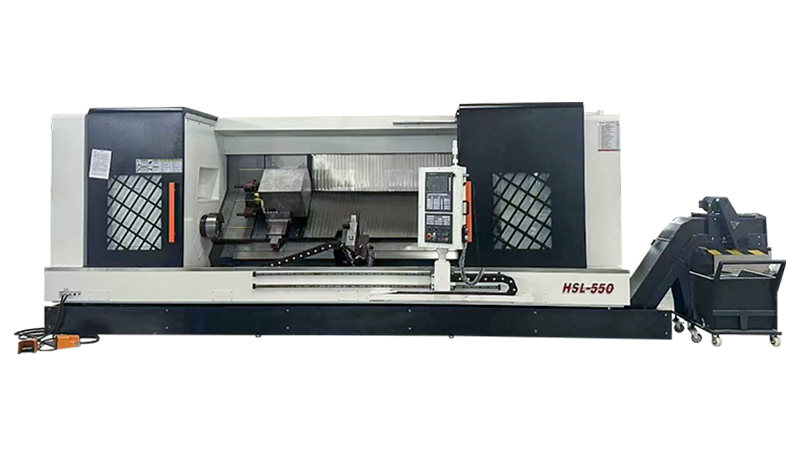 HSL Heavy-Duty Dual-Spindle Turning and Milling MachineA heavy-duty dual-spindle turn-mill entry for large cylinder work where rigidity, stable clamping, and part handling are central selection concerns.View Product →
For these jobs, ask practical questions early. How will the part be loaded? Does the crane or hoist reach the work area cleanly? Is there enough bed length for the fixture and the tool clearance? Will the inspection plan check the bore at multiple depths? A heavy-duty machine can remove a lot of process risk, but only if the part handling and inspection plan are designed with the same care as the cutting cycle.
The case for combined machining is often presented as a list of technical capabilities. On the floor, it usually comes down to time and uncertainty. Every extra setup adds a fixture change, a wait for the next machine, a new zero point, and another chance for a chip or a clamp mark to affect the result. A cylinder CNC turning and milling machine reduces those moments, and that is why the savings tend to show up in more than one place.
A useful machine quote starts before the price sheet. Bring the drawing, the blank condition, the tolerance stack, and the annual volume. Then work through the points below. They are simple, but they expose most of the risk that a cylinder job carries.
For hydraulic cylinder bodies, the port and groove pattern often decides the process. A hydraulic turning and milling machine can keep those features in the same setup as the bore, but the tool access and chip control still need to be reviewed on the drawing. That is the part of the conversation where experience saves more time than a specification sheet.
Start with the part family, not the machine name. If the work is repeatable and the features are stable, look at a standard dual-spindle platform. If the drawings vary and the bore keeps company with ports, grooves, or awkward milled details, look at a customizable platform. If part weight and rigidity dominate, look at a heavy-duty platform. Then check the small things that decide whether the machine will actually run well: chuck size, tool clearance, chip evacuation, lifting access, and inspection access.
That approach keeps the decision grounded. A cylinder CNC turning and milling machine is valuable when it removes a real setup problem, not when it simply adds a longer capability list. When the part, the process, and the machine are matched with care, the result is usually a quieter shop floor, a more predictable cycle, and a bore that stays where it belongs.

Copyright © Xuancheng Huzheng Machinery Trading Co., Ltd. Rights Reserved.

