 English
 中文简体
中文简体 русский
 日本語
日本語
Home / Newsroom / Industry News / Small CNC Machine Tools: How to Pick the Right One and Get the Most Out of It
Industry News
 Email: cnc88max@dingtalk.com
 Phone: +86-18021988367
Content
A small CNC machine tool is a computer-numerically-controlled cutting or forming machine designed for compact workspaces, lower production volumes, or precision work on smaller workpieces — generally with a work envelope under 500 × 500 × 500 mm, a machine footprint that fits within a standard workshop bay, and a price point accessible to small manufacturers, job shops, educational institutions, R&D labs, and serious hobbyists. The term covers a broad family of machines including mini CNC milling machines, small CNC lathes, benchtop CNC machining centers, compact CNC routers, and small CNC grinding machines — all sharing the defining characteristic of CNC motion control applied to a machine sized and priced for smaller-scale operation.
The market for compact CNC machine tools has grown substantially over the past decade, driven by several converging trends. The rise of small-batch and custom manufacturing — fueled by e-commerce, product personalization, and on-demand production models — has created demand for affordable precision machining capability that large industrial machining centers can't economically justify for low volumes. Simultaneously, improvements in CNC controller technology, servo motor performance, and machine rigidity have allowed manufacturers to deliver genuinely capable machines in significantly smaller packages than was possible even ten years ago. Today's benchtop CNC machine tool can perform operations that would have required a full-size machine a generation ago.
The buyers for small CNC machine tools are correspondingly diverse. Small precision parts manufacturers use them for prototype development and small-batch production runs that don't justify tying up a large machining center. Watchmakers, jewelry manufacturers, and dental lab technicians use specialized micro-CNC machines for extreme-precision small part work. Universities and vocational training schools use benchtop CNC machines to teach machining principles without the cost, space, or safety requirements of industrial machines. And an increasingly active community of small business owners, inventors, and advanced hobbyists uses desktop CNC machine tools to produce custom parts, artistic metalwork, and low-volume product components from home workshops and small studios.
Small CNC machine tools come in several fundamentally different configurations, each suited to different machining operations and workpiece types. Choosing the wrong machine type — regardless of quality or price — will leave you unable to perform the operations you need. Here's a clear breakdown of the main categories:
A small CNC milling machine uses a rotating cutting tool — an end mill, face mill, or drill — to remove material from a stationary workpiece held on a movable table. The table moves in the X and Y axes while the spindle moves in Z, allowing the machine to produce flat surfaces, pockets, slots, contours, holes, and complex 3D shapes. Most small CNC milling machines are 3-axis machines, though 4-axis and 5-axis compact mills are available at higher price points and allow more complex part geometries to be machined without repositioning. The small CNC milling machine is the most versatile machine type in the compact CNC category and the first choice for general-purpose small part machining in metal, plastic, and composite materials.
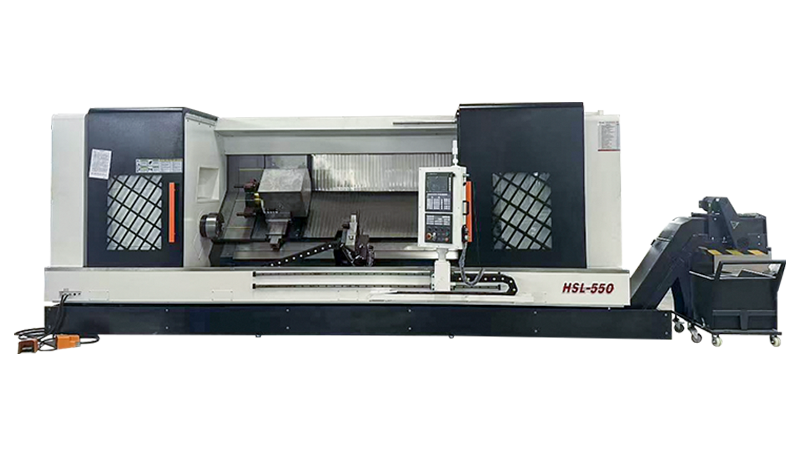
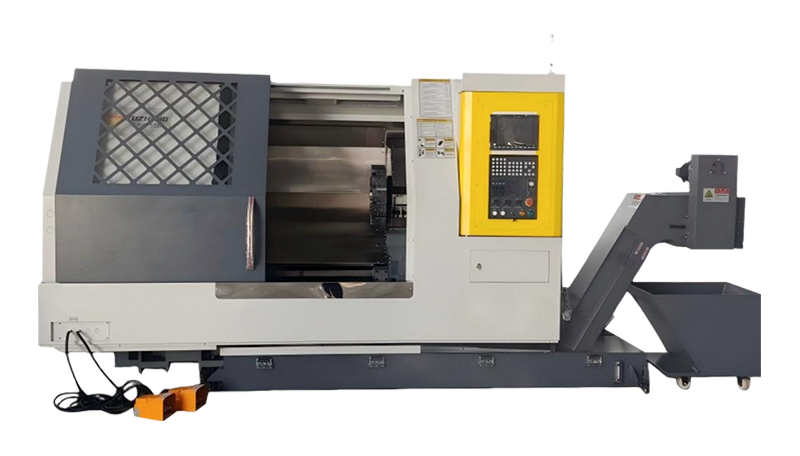
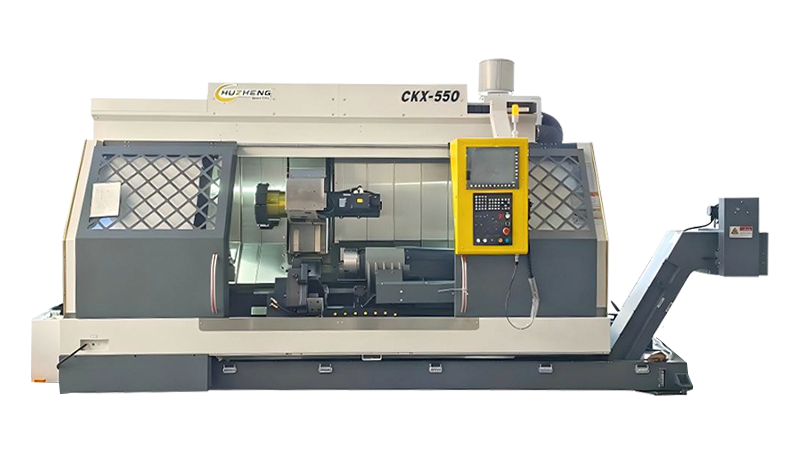
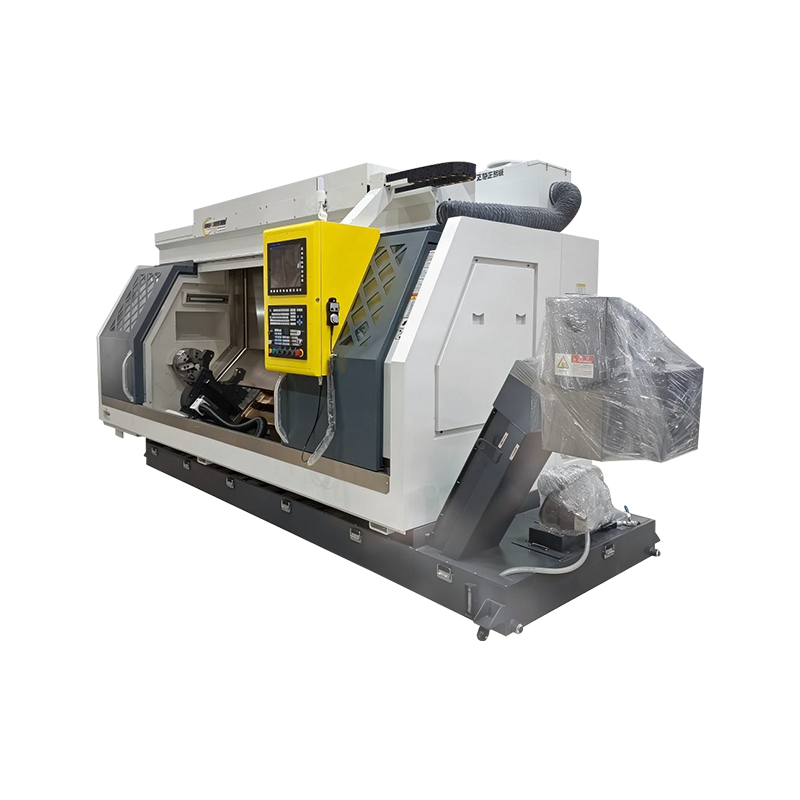
A small CNC lathe rotates the workpiece while a stationary cutting tool removes material, producing cylindrical and conical shapes, threaded features, bores, and turned profiles. CNC lathes are the natural choice for any part that is fundamentally rotationally symmetric — shafts, bushings, fittings, nozzles, valve bodies, and similar components. Many small CNC lathes include live tooling capability, where a powered rotating tool can be applied to the spinning workpiece for milling, drilling, or slotting operations without removing the part from the chuck — effectively combining turning and milling capability in a single setup. This capability is particularly valuable for small shops where setup time and part repositioning are significant cost drivers.
A benchtop CNC machining center is a more fully featured version of a small CNC milling machine, typically including an automatic tool changer (ATC), a coolant system, full enclosure, and a more capable CNC controller. The ATC allows the machine to switch between multiple cutting tools automatically during a program — eliminating manual tool changes and enabling complex multi-operation parts to be completed in a single setup. Benchtop machining centers sit between simple CNC mills and full industrial machining centers in both capability and price, and they represent the most productive small CNC machine tool option for shops that need consistent output quality and minimal operator involvement per part.
A small CNC router is optimized for cutting softer materials — wood, MDF, plastics, foam, soft aluminum, and composites — at higher speeds than a CNC mill. Routers typically have larger work areas relative to their machine size than mills, with gantry-style construction that allows sheet goods to be processed efficiently. The spindle speeds on CNC routers are much higher than mills (18,000–30,000 RPM vs. 5,000–12,000 RPM on a typical small CNC mill), reflecting the need for high surface speed when cutting wood and plastics with smaller-diameter tools. A small CNC router is not the right machine for machining hard metals — the lighter construction and high-speed spindle are optimized for softer material removal, not the heavy cutting forces required for steel or stainless.
Small CNC grinding machines use abrasive wheels rather than cutting tools to achieve very high dimensional accuracy and surface finish quality — typically achieving tolerances of ±0.001 mm or better and surface finishes in the Ra 0.2–0.8 µm range that are simply not achievable with milling or turning alone. Compact CNC surface grinders and cylindrical grinders are used for finishing hardened tool steel components, precision gauge blocks, hydraulic valve bodies, and other parts where the final dimensional and surface quality requirements exceed what cutting tools can deliver. They are specialized machines with a narrower application range than mills or lathes, but indispensable for precision toolmaking and hardened part finishing operations.
| Machine Type | Primary Operation | Best Materials | Typical Work Envelope | Typical Price Range |
| Small CNC Milling Machine | Flat surfaces, pockets, contours, holes | Metals, plastics, composites | 200×200×200 to 500×400×400 mm | $5,000–$50,000 |
| Small CNC Lathe | Turning, threading, boring | Metals, plastics | Swing 150–300 mm, length 300–600 mm | $8,000–$60,000 |
| Benchtop CNC Machining Center | Multi-tool milling, drilling, tapping | Metals, plastics, composites | 300×300×300 to 500×400×400 mm | $20,000–$100,000 |
| Small CNC Router | Cutting, engraving, profiling sheet goods | Wood, MDF, plastics, soft aluminum | 300×400 to 600×900 mm (sheet area) | $1,500–$20,000 |
| Small CNC Grinding Machine | High-precision finishing of hardened parts | Hardened tool steel, carbide | 200×500 to 300×600 mm (surface) | $15,000–$80,000 |
Marketing specifications for small CNC machine tools are often presented in ways that obscure more than they reveal. Understanding which specifications genuinely predict real-world performance — and which are marketing numbers that rarely translate to actual results — is essential for making a sound purchasing decision.
Spindle power determines how aggressively the machine can cut — directly affecting material removal rate, tool life, and the range of materials the machine can handle. For small CNC milling machines cutting aluminum and non-ferrous metals, 1–3 kW of spindle power is typically adequate. For steel cutting, 3–7.5 kW or more is needed to maintain productive cutting parameters. Be cautious of machines that list peak power rather than continuous rated power — a machine with 2 kW continuous and 3 kW peak is not the same as a machine with 3 kW continuous, and the difference will show up immediately when you attempt sustained cuts in harder materials. Torque at low RPM is equally important for milling: a high-speed spindle with poor low-RPM torque will struggle with large-diameter face milling or aggressive slotting operations.
Rigidity is arguably the single most important performance characteristic of any CNC machine tool, and it is the area where the most significant quality differences exist between price tiers of small CNC machines. A rigid machine transmits cutting forces from the tool into the workpiece consistently, producing accurate dimensions and good surface finish. A flexible or poorly damped machine deflects under cutting load, producing dimensional error, poor surface finish, and chatter — the self-excited vibration that destroys surface quality and accelerates tool wear. Cast iron frames provide the best combination of rigidity and vibration damping but add weight. Welded steel fabrications can be rigid but have poorer natural damping. Aluminum extrusion frames are light and inexpensive but offer significantly less rigidity — suitable for routing wood and plastics but inadequate for serious metal cutting.
The linear motion system — the guides and drive mechanism that move each axis — determines the machine's positioning accuracy, repeatability, and long-term geometric stability. Ballscrew drives with linear rail guides (either profiled linear rails or round-rail linear bearings) are the standard for quality small CNC machine tools. Profiled linear rails (such as Hiwin or THK brand rails) provide higher load capacity and stiffness than round-rail alternatives and are the preferred choice for metal cutting applications. Rack-and-pinion drives are used on larger CNC routers where the travel length makes ballscrews impractical, but they offer lower positioning accuracy than ballscrews and are not suitable for precision metal machining. Budget machines sometimes use leadscrews (Acme thread) rather than ballscrews — these have significantly higher friction and backlash, limiting positioning accuracy and making them unsuitable for demanding work.
The CNC controller is the brain of the machine — it interprets G-code programs, coordinates axis motion, manages spindle speed, and handles all real-time machining functions. Quality controllers from established manufacturers (Fanuc, Siemens, Mitsubishi, Heidenhain, and for more affordable machines, Syntec, GSK, or Mach3/4-based PC controllers) provide reliable motion control, good diagnostic capability, and extensive compatibility with CAM software outputs. Proprietary controllers on budget machines often have limited G-code compatibility, poor error diagnostics, and minimal support resources — frustrating to work with and expensive to repair or replace. For small shops and hobbyists, Mach3 or Mach4-based controllers running on a dedicated PC offer an excellent combination of capability, flexibility, and community support. For professional operations, investing in a machine with a name-brand industrial controller pays dividends in reliability, support availability, and operator familiarity.
Positioning accuracy (how close the machine gets to the commanded position) and repeatability (how consistently it returns to the same position across multiple cycles) are the fundamental metrics of a CNC machine tool's precision capability. Quality small CNC milling machines and machining centers typically achieve positioning accuracy of ±0.01 mm and repeatability of ±0.005 mm or better. Budget machines may claim similar figures but often achieve them only under ideal conditions — without cutting load, at room temperature, and with a new machine. Real-world accuracy in production conditions depends on ballscrew quality, linear guide preload, thermal stability, and controller compensation capability. When evaluating specifications, look for ISO 230-2 or VDI/DGQ 3441 test results rather than manufacturer-claimed figures, which are not always derived from standardized testing.
Material capability is one of the most practically important characteristics of any small CNC machine tool, and it varies significantly between machine types and quality levels. Here's a realistic assessment of what different compact CNC machines can handle:
The market for compact CNC machine tools spans an enormous price range — from $1,500 desktop routers to $100,000+ benchtop machining centers — and the performance gap between the extremes is equally dramatic. Understanding where the quality differences actually lie helps buyers make honest assessments of what they need versus what they're paying for.
Budget small CNC machines typically use aluminum extrusion or thin-wall welded steel frames that flex under cutting load. This flexibility manifests as dimensional error, poor surface finish, and chatter in anything more demanding than light cuts in soft materials. Quality machines use cast iron or heavily ribbed fabricated steel structures that are significantly more rigid and better at damping vibration. The weight difference is immediately apparent — a quality small CNC milling machine in the same work envelope as a budget machine will typically weigh two to four times as much, and that mass is the physical evidence of the structural quality that produces better machining results.
The spindle bearing specification directly determines runout — the degree to which the cutting tool deviates from perfect rotation — and therefore the surface finish and dimensional accuracy achievable. Quality spindles use precision angular contact bearings with runout of 1–3 µm; budget spindles with lower-grade bearings may have 10–20 µm of runout, which is immediately visible in surface finish quality. Spindle bearing quality also determines noise level and service life — a noisy spindle is almost always a spindle with inadequate bearing quality, and premature spindle failure is one of the most common and expensive repair items on budget CNC machines.
A CNC machine tool is a long-term capital investment, and the availability of technical support, spare parts, and service capability is a critical part of the total value equation. Established machine tool manufacturers maintain parts inventories, provide technical documentation, and offer support through distributors or factory service teams. Unknown or rapidly changing budget brands may offer no meaningful support — leaving buyers unable to source replacement parts or get technical help when problems arise. For any machine that will be used for production work, after-sales support capability should be weighted heavily in the purchasing decision, even when it means paying more upfront.
The machine itself is only part of a functional small CNC machining setup. These accessories and support items are necessary for productive, safe, and accurate operation:
The small CNC machine tool market has a higher proportion of buyer regret than almost any other capital equipment category, largely because machines are often selected based on price or surface specifications rather than genuine suitability for the intended application. These are the most common mistakes:

Copyright © Xuancheng Huzheng Machinery Trading Co., Ltd. Rights Reserved.