 English
 中文简体
中文简体 русский
 日本語
日本語
Home / Newsroom / Industry News / Why Is the Efficient Machining Turn-Mill Composite Machine Tool Gaining Industry Momentum?
Industry News
 Email: cnc88max@dingtalk.com
 Phone: +86-18021988367
Content
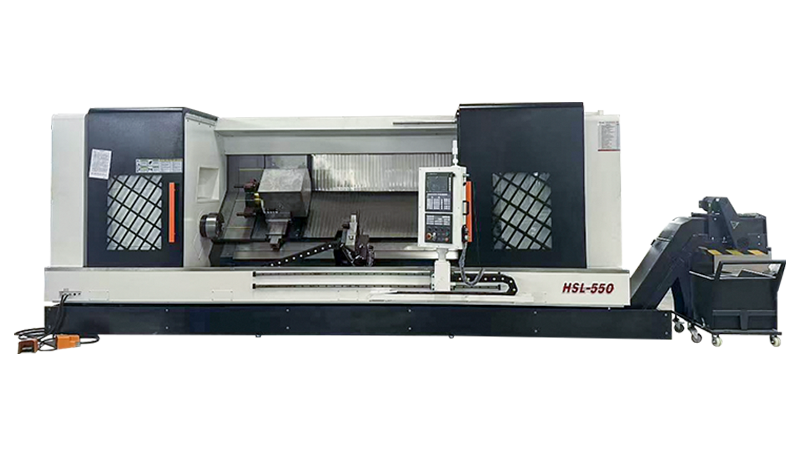
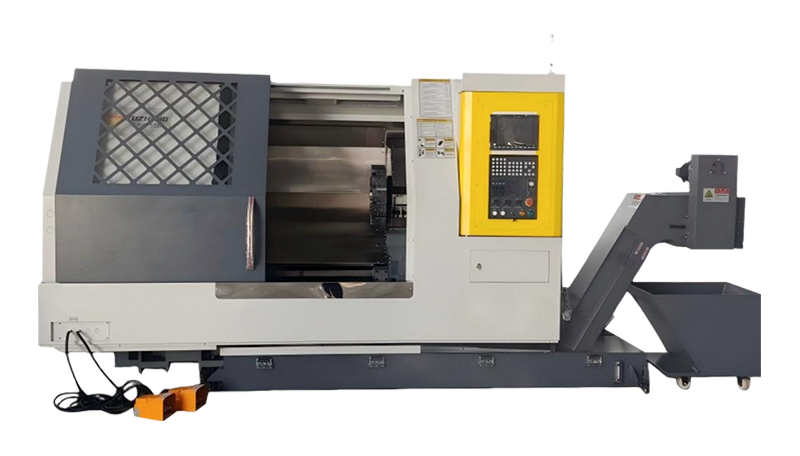
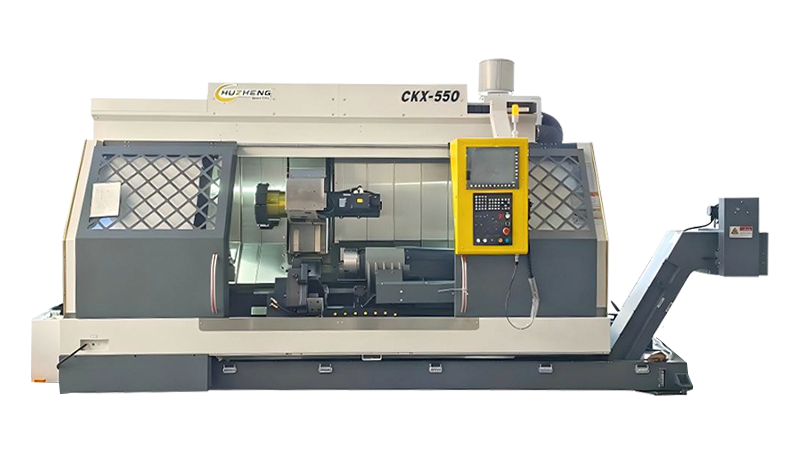
The Efficient Machining Turn-Mill Composite Machine Tool is gaining industry momentum because manufacturers are under increasing pressure to produce complex components faster, more accurately, and at lower cost. Traditional production models that separate turning and milling into different machines often create bottlenecks, increase setup time, and introduce tolerance stacking errors. In contrast, a turn-mill composite system consolidates multiple machining processes into a single platform, significantly improving workflow efficiency.
Industries such as automotive, aerospace, medical devices, and precision engineering now require multi-featured parts with tight tolerances and short lead times. The ability to complete these components in one clamping operation makes the composite machine tool an increasingly practical investment rather than a luxury upgrade.
One of the most significant advantages of the Efficient Machining Turn-Mill Composite Machine Tool is its ability to perform turning, milling, drilling, tapping, and contouring in one setup. Eliminating secondary clamping reduces cumulative positioning errors and shortens total cycle time. This directly translates into higher dimensional stability and improved repeatability across production batches.
Advanced composite machine tools are equipped with multi-axis control systems that enable simultaneous operations. While one spindle performs turning, live tooling can execute milling tasks. This overlapping of processes reduces idle time and maximizes spindle utilization, increasing overall equipment effectiveness.
Many configurations include dual-spindle or sub-spindle systems, allowing automatic transfer for back-side machining. This feature ensures concentric alignment and eliminates manual intervention, further improving consistency and reducing operator workload.
The momentum behind the Efficient Machining Turn-Mill Composite Machine Tool is largely driven by measurable productivity gains. Manufacturers report shorter lead times and reduced labor intensity after adopting composite machining strategies. The practical benefits include:
These gains are particularly valuable in high-mix, low-to-medium volume production where flexibility and quick changeover are essential.
Precision remains a core reason why efficient machining turn-mill composite machine tools are widely adopted. By minimizing part handling and maintaining a consistent datum reference, these machines reduce geometric deviation. This is critical for components requiring tight concentricity, perpendicularity, and surface finish standards.
High-rigidity machine beds, thermal compensation systems, and advanced servo controls further enhance stability. As a result, manufacturers can achieve superior surface finishes while maintaining high feed rates, balancing speed with accuracy.
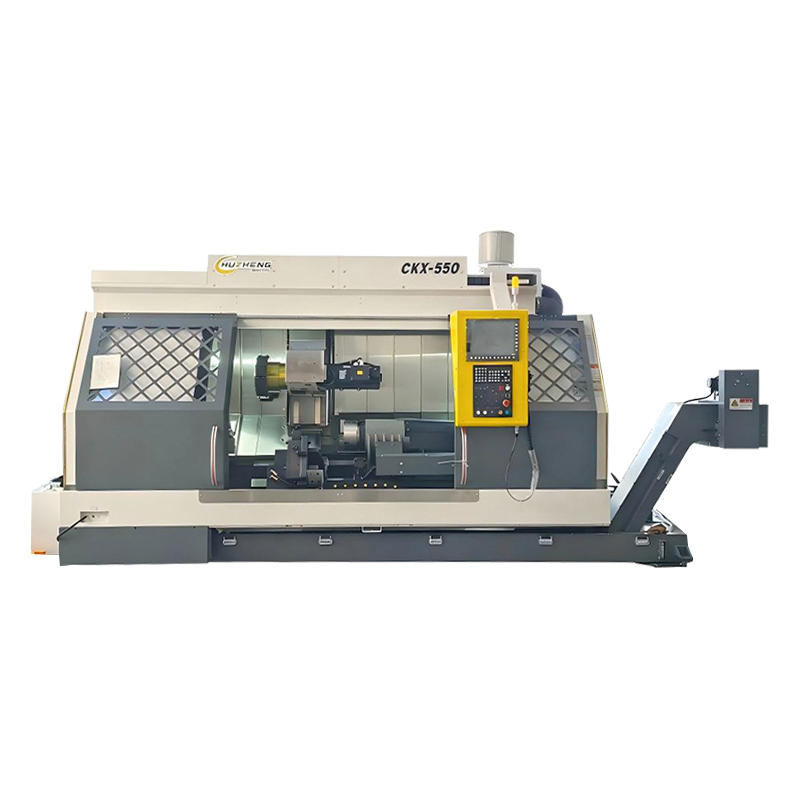
Although composite machine tools represent a higher upfront investment compared to standalone lathes or machining centers, long-term financial performance often justifies the expenditure. Consolidating operations reduces the number of machines required, which lowers maintenance costs, tooling inventory, and energy consumption.
The following comparison highlights cost-related advantages:
| Factor | Traditional Setup | Turn-Mill Composite Tool |
| Machine Quantity | Multiple machines required | Single integrated system |
| Setup Time | Repeated setups | One-time clamping |
| Labor Involvement | Higher handling requirements | Reduced manual transfer |
| Scrap Risk | Higher due to repositioning errors | Lower through consistent referencing |
When considering floor space savings, reduced inspection requirements, and improved throughput, the composite system often delivers faster ROI than initially expected.
Modern product designs increasingly feature intricate geometries, angled holes, deep cavities, and complex contours. The Efficient Machining Turn-Mill Composite Machine Tool accommodates these requirements through multi-axis capabilities and advanced tool path programming.
For aerospace brackets, medical implants, and precision automotive shafts, the machine can complete contour milling and precision turning without repositioning. This capability not only improves geometric consistency but also accelerates prototyping cycles and new product development timelines.
Another factor driving industry momentum is digital integration. Efficient machining turn-mill composite machine tools are equipped with advanced CNC systems that support real-time data monitoring, tool life tracking, and predictive maintenance alerts. These features reduce unplanned downtime and improve production planning accuracy.
The machines are also compatible with robotic loading systems, bar feeders, and automated inspection devices. In high-volume production, this enables lights-out manufacturing, where machines operate with minimal human intervention. The ability to connect with manufacturing execution systems enhances transparency and facilitates continuous process optimization.
Sustainability considerations are increasingly influencing equipment selection. By consolidating processes into one machine, composite tools reduce overall energy consumption compared to operating multiple standalone units. Shorter cycle times also decrease electricity usage per part.
Additionally, fewer handling steps mean lower scrap rates and reduced material waste. Coolant management systems and energy-efficient spindle drives further support environmentally responsible manufacturing practices.
The Efficient Machining Turn-Mill Composite Machine Tool is gaining industry momentum because it delivers practical, measurable improvements in productivity, precision, and cost efficiency. Its integrated architecture addresses the challenges of modern manufacturing, where complexity, speed, and quality must coexist.
Rather than representing a temporary trend, the adoption of composite machining reflects a strategic shift toward streamlined, data-driven production environments. For manufacturers seeking competitive advantage, reduced operational risk, and sustainable growth, investing in this advanced machining solution has become an increasingly logical decision.

Copyright © Xuancheng Huzheng Machinery Trading Co., Ltd. Rights Reserved.