
 English
 中文简体
中文简体 русский
 日本語
日本語
Home / Newsroom / Industry News / Custom CNC Turning and Milling Machine: How to Specify the Right Build
Industry News
 Email: cnc88max@dingtalk.com
 Phone: +86-18021988367
Ask ten machinists what a custom CNC turning and milling machine actually is, and you will get ten slightly different answers. For one shop it means a standard lathe with a different chuck and two extra tool stations. For another it means a machine drawn around a single part family, where spindle speeds, axis travels and tooling were chosen because one stubborn workpiece refused to be economical on anything else.
We have spent years working on one product line and nothing else: turning and milling composite machines. That narrow focus has taught us where customisation genuinely pays for itself, and where it quietly drains a budget. What follows is our honest walk-through — what is usually worth changing, what is usually not, and how to describe your parts clearly enough that the machine you receive suits the work sitting in front of it.
Content
Most buyers who search for a custom machine are not really asking for something exotic. They are asking for a machine that fits their part, their batch size and their operators. In our experience, the requests cluster around a handful of familiar areas.
The other half of the conversation matters just as much: knowing what to leave alone. Frames, spindle units and control platforms that have already proven themselves in the field are usually the last things worth changing. A machine assembled from a familiar base and a carefully chosen set of options tends to arrive faster, behave predictably and cost less to keep running.
Rather than starting every enquiry from a blank sheet, we organise our work around three turning and milling families. They share the same core idea — turning and milling operations completed in one machine — but they differ in how much freedom the structure gives you.
The CKD platform is our standard dual-spindle turning and milling machine. It is the right starting point when your part family is stable and your priority is repeatability across long production runs. Customisation here is mostly practical: workholding, the tooling package, chip management and control options.
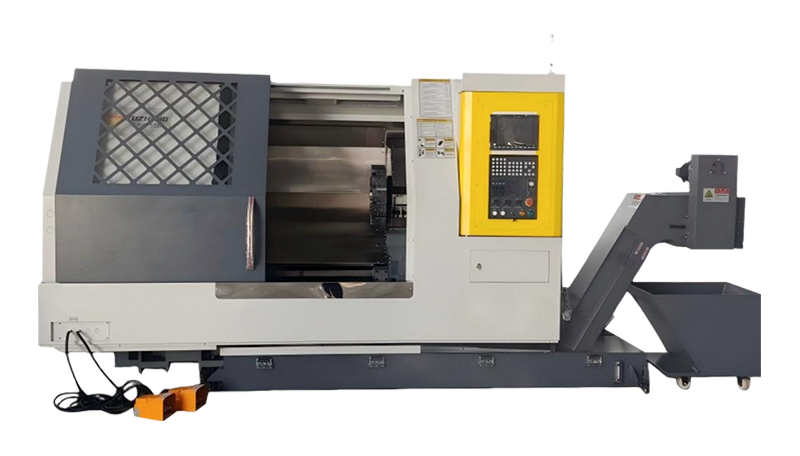 CKD Series Standard Dual-Spindle Turning and Milling MachineStandard dual-spindle turning and milling machine for stable part families, with practical customization in workholding, tooling, chip management, and controls for repeatable long runs.View Product →
The CKX platform is the customizable dual-spindle turning and milling machine, and it is where most genuinely bespoke requests land. If your shop runs several different part families on the same floor, or changeovers happen weekly rather than monthly, this is the family worth discussing in detail. Spindle arrangement, travels, tooling interfaces and automation connections can all be adjusted within the platform.
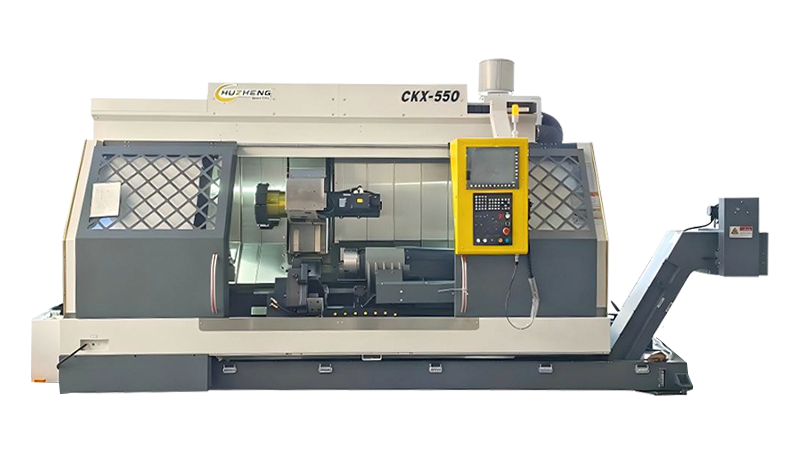 CKX Series Customizable Dual-Spindle Turning and Milling MachineCustomizable dual-spindle turning and milling machine suited to varied part families and frequent changeovers, with adjustable spindle arrangement, travels, tooling interfaces, and automation connections.View Product →
The HSL platform is the heavy-duty dual-spindle turning and milling machine, built for large and heavy parts where metal removal rates and structural stability come first. Customisation tends to be structural: how the machine carries the load, how the drives are matched to it, and how chips and coolant are managed when the cutting is aggressive.
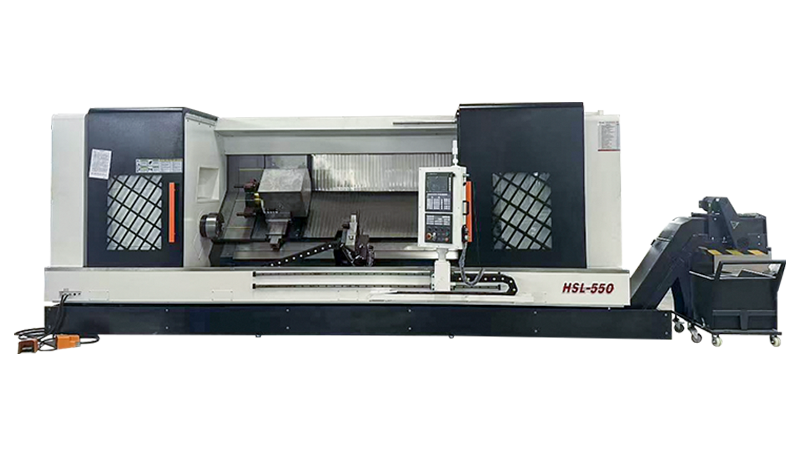 HSL Series Heavy-Duty Dual-Spindle Turning and Milling MachineHeavy-duty dual-spindle turning and milling machine for large, heavy parts where metal removal rates and structural stability matter; customization covers load carrying and chip handling.View Product →
| Series | Build Character | Typical Fit | Customisation Scope |
|---|---|---|---|
| CKD | Standard dual-spindle turning and milling | Stable production runs of similar parts | Moderate: workholding, tooling, control options |
| CKX | Customizable dual-spindle turning and milling | Mixed part families, frequent changeovers | Wide: spindle layout, travels, tooling, automation interfaces |
| HSL | Heavy-duty dual-spindle turning and milling | Large, heavy parts with high metal removal | Structural and drive-level adaptation |
Part shape, not part size, is usually the deciding factor. Over the years our product development has drifted towards a set of recognisable applications, and it helps to know which one you belong to before the first technical call.
If several of these describe your shop at once, the discussion usually moves towards a broader turning and milling composite solution rather than a single machine — a configuration chosen for the mix of work you expect over the next few years, not just the job on the table today.
Most disappointing machine purchases trace back to a vague specification, not a bad machine. Before you send an enquiry, it is worth collecting a few things properly.
Good preparation shortens the technical discussion considerably. If you want to read further before contacting anyone, our buyer's guide to turning and milling composite centers covers the same ground from a purely technical angle.
A machine is a long commitment, and the first year of ownership is rarely the expensive one. Because we build only turning and milling composite machines, our spare parts inventory and technical support team are dedicated to that single product line rather than spread across a catalogue. That is a practical advantage in the middle of a production week.
Our quality management system follows ISO9001 and ISO14001 practice, and quality control runs from casting and assembly through to machine delivery and after-sales support. Our engineers work on turning and milling processes every day, which means the conversation about tool paths, fixturing and cycle time can start before the machine is ordered rather than after it is installed. We would rather talk you out of an unnecessary option than sell you one you will never use.
These are our own descriptions of how we work, not third-party certifications of performance, and we are happy to be judged on a factory visit, a reference conversation or a trial part.
Choosing a custom CNC turning and milling machine is really a conversation about your parts, your batch sizes and your operators. The machine that suits you is rarely the most heavily optioned one, and it is almost never a copy of what the shop down the road bought. Start with the workpiece, be specific about the tolerances that genuinely matter, and keep the proven parts of the platform standard wherever you can. If you would like a second opinion on a part you are trying to consolidate onto one machine, send us the drawing — that is usually where the useful discussion begins.

Copyright © Xuancheng Huzheng Machinery Trading Co., Ltd. Rights Reserved.




