
 English
 中文简体
中文简体 русский
 日本語
日本語
Home / Newsroom / Industry News / CNC Turning and Milling Machine: A Practical Guide to Turn-Mill Centers
Industry News
 Email: cnc88max@dingtalk.com
 Phone: +86-18021988367
If you work in a machine shop, you have likely heard the term CNC turning and milling machine used in different ways. Sometimes it refers to a lathe with live tooling. Sometimes it means a full turn-mill center that can complete a part in one setup. The common idea is simple: these machines bring turning and milling together so that complex parts do not have to travel from one machine to another. At Huzheng, we have spent years focused on this category. This guide explains what these machines are, how they work, where they fit, and what to consider when choosing one.
Content
A CNC turning and milling machine is a computer-controlled machine tool that performs both turning and milling operations. In traditional turning, the workpiece rotates while a single-point tool removes material. In traditional milling, the cutting tool rotates while the workpiece is held or fed along multiple axes. A turn-mill machine combines these motions on one platform, usually with a main spindle, a turret or tool changer, and live tooling that can rotate cutting tools. Many models also include a sub-spindle for the back side of the part.
The value of combining processes is not just convenience. When a part is turned, milled, drilled, and tapped without being removed from the spindle, the shop avoids errors that come from re-fixturing. Each new setup introduces slight variations in position, and those variations add up on tight-tolerance features. A turn-mill machine keeps the part in one coordinate system, so features that must align stay aligned.
On a typical CNC turning and milling machine, the main spindle rotates the workpiece. The turret or tool carrier moves in X and Z axes, and many machines add a Y axis for off-center milling. A C axis allows the spindle to stop at a precise angle, which is essential for milling flats, slots, and holes. Live tooling provides rotary motion for milling cutters and drills. When a sub-spindle is present, it can pick up the part after the first side is complete and machine the back end without manual handling.
There are practical reasons why turn-mill technology has become common in job shops and production facilities. The most obvious is fewer setups. A part that once required a lathe, a mill, and a drill press can often be completed on one machine. That reduction in handling time translates directly into shorter lead times and less work in progress.
Other benefits are less visible but equally important:
These advantages are especially clear for parts with turned diameters and milled features, such as shafts with keyways, cylinders with cross-holes, and hydraulic components with angled ports.
The category covers a wide range of configurations. Some machines are built for standard dual-spindle work, while others are designed for five-axis motion, heavy cutting, or specific part families. The table below gives a simple overview of common directions. It is not a technical specification sheet, but it can help you frame the conversation when you compare options.
| Machine type | Key feature | Typical focus |
|---|---|---|
| Dual-spindle turn-mill | Main and sub-spindle for both ends | Shafts, symmetric parts, reduced setups |
| Five-axis mill-turn | Additional rotary axes for complex geometry | Angled features, complex contours |
| Heavy-duty turn-mill | Rigid structure for large workpieces | Large shafts, flanges, cylinders |
| High-speed / high-rigidity | Optimized for speed or stability | Precision parts, consistent finish |
| Cylinder-bore turn-mill | Designed around internal boring and milling | Engine blocks, hydraulic cylinders |
| Hydraulic-specific turn-mill | Focused on hydraulic component features | Valve bodies, pump parts, cylinders |
Within these broad types, builders often organize their products into series. At Huzheng, our main lines are the CKD, CKX, and HSL series. The CKD series is our standard dual-spindle turning and milling machine. The CKX series is a customizable dual-spindle machine for shops that need more flexibility. The HSL series is built for heavy-duty dual-spindle work. Each series shares the same focus: bringing turning and milling into one efficient process.
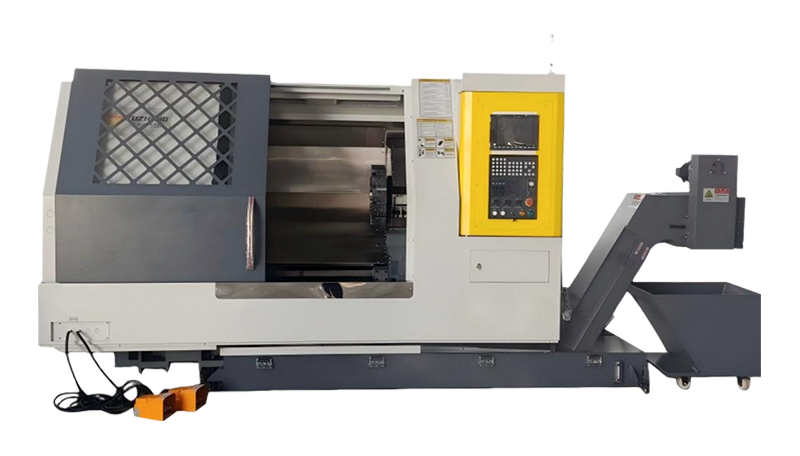 CKD Series Standard Dual-Spindle Turning and Milling MachineStandard dual-spindle turning and milling machine in the CKD/CKX/HSL family, positioned for combined turn-mill work where basic live-tool lathes may not fit.View Product →
 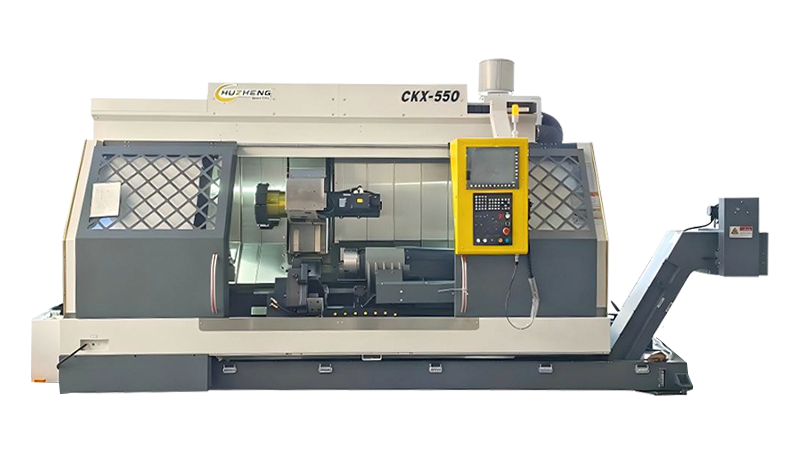 CKX Series Customizable Dual-Spindle Turning and Milling MachineCustomizable dual-spindle turning and milling machine in Huzheng's CKD/CKX/HSL lineup, suited to shops seeking flexibility for combined turn-mill operations.View Product →
 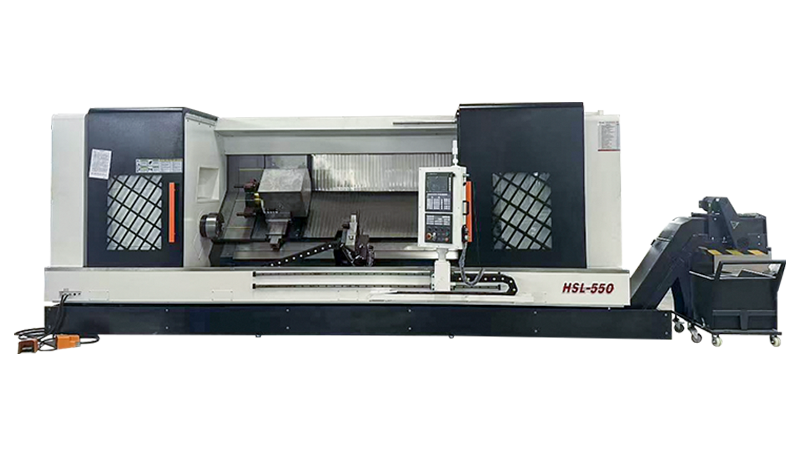 HSL Series Heavy-Duty Dual-Spindle Turning and Milling MachineHeavy-duty dual-spindle turning and milling machine in Huzheng's CKD/CKX/HSL family, positioned for demanding combined turn-mill work.View Product →
If your parts are small and simple, a basic live-tool lathe may be enough. If they have deep bores, long shafts, or multiple angled features, a more capable turn-mill center is usually the better fit. The key is to match the machine's motion and tooling to the features you actually cut.
Combined machining is not a universal answer, but it is a strong fit for several part families. Cylinder and cylinder-bore work is one example. These parts often need a turned outside diameter, a bored inside diameter, and milled ports or mounting faces. Doing all of that in one setup helps maintain wall thickness and bore alignment. Shaft work is another example. A shaft may need turning on both ends, milling of flats or keyways, and drilling of cross-holes. A dual-spindle turn-mill machine can often complete the part without a second operation.
Hydraulic components also benefit. Valve bodies, pump housings, and hydraulic cylinders tend to have intersecting bores and ports that must align precisely. When those features are machined in one setup, the risk of mismatch drops. Heavy and large parts are another category. Here, rigidity and spindle torque matter as much as axis count, because the machine must handle the weight and cutting forces without chatter. High-speed and high-rigidity machines serve a different need: they focus on cycle time, surface quality, and repeatability for smaller precision parts. Multi-process composite work brings these ideas together, using one machine to perform turning, milling, drilling, and tapping in a single flow. For a closer look at how these applications come together, see our turn-mill composite solutions.
Choosing a CNC turning and milling machine is mostly a matter of matching capability to your real parts. It helps to gather a representative set of drawings and answer a few questions before you talk to any builder. The list below is a practical starting point:
It is also wise to review how a machine handles chip evacuation, coolant, and tool changes. These details shape daily productivity more than a single specification number. For a more detailed selection framework, our buyer's guide walks through the same questions in more depth.
Our company, Xuancheng Huzheng Machinery Trading Co., Ltd., works as an integrated manufacturer focused on turning and milling composite technology. We are not trying to build every kind of machine tool. Instead, we concentrate our engineering, production, and service resources on turn-mill machines. That focus shapes how we design the CKD, CKX, and HSL series and how we support them after delivery. Our production base includes CNC gantry machining centers, surface grinders, and guideway grinders, and our quality process is structured around ISO 9001 and ISO 14001 practices. We keep spare parts and technical support dedicated to this product line, because a machine is only as useful as the service behind it.
We also believe that the best machine conversation starts with the part, not the catalog. When a customer shares drawings and cycle-time goals, we can talk about spindle configuration, tooling, and automation in a way that is grounded in their work. That approach has served us well with customers in China, Europe, and the Americas, and it is the way we prefer to work with new partners.
Once a turn-mill machine is on the floor, small habits make a big difference. Keep the tooling package organized and preset whenever possible, because a turn-mill center often uses many tools in one program. Pay attention to chip evacuation, especially when boring deep holes or milling pockets. Poor chip control can lead to tool breakage, poor finish, and unexpected downtime. Warm up the spindle before running tight-tolerance work, and check coolant concentration regularly. Train operators on the machine's coordinate system and work offsets, since a single setup may involve both turning and milling operations. Finally, keep a log of proven programs and tool life. That record becomes a real asset when you quote similar parts in the future.
A CNC turning and milling machine is best understood as a practical answer to a common problem: how to make complex parts accurately without moving them across a series of machines. The technology is mature, but the benefits depend on matching the machine to the part. If you are evaluating a turn-mill center, start with the features that need to align, the ends that need machining, and the volume you expect. Those answers will point you toward the right configuration. If you would like to discuss a specific part or process, our team is always glad to look at the drawings and share what we have learned.

Copyright © Xuancheng Huzheng Machinery Trading Co., Ltd. Rights Reserved.




