 English
 中文简体
中文简体 русский
 日本語
日本語
Home / Newsroom / Industry News / Cylinder Turning and Milling Composite Center: One Machine, Fewer Setups, Better Parts
Industry News
 Email: cnc88max@dingtalk.com
 Phone: +86-18021988367
Content
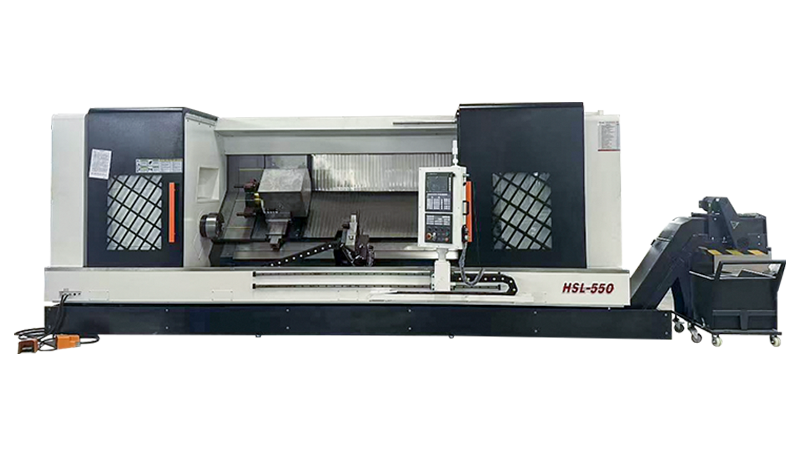
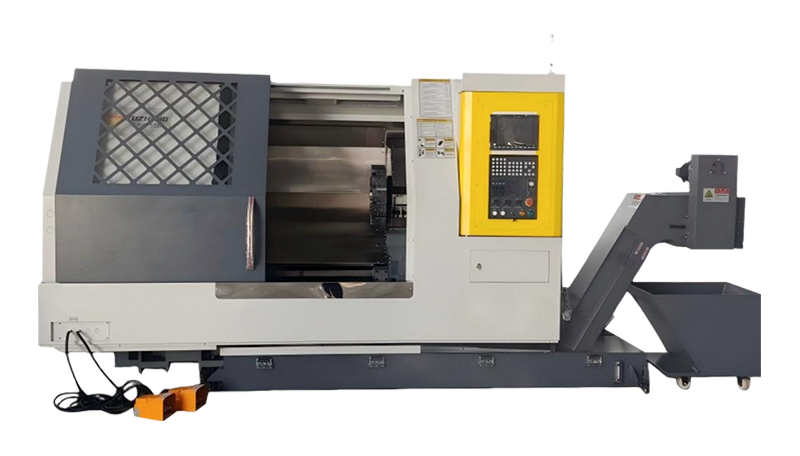
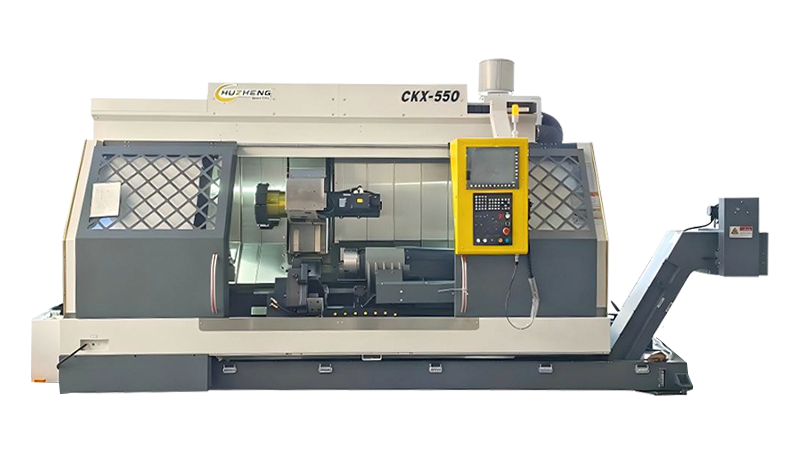
A cylinder turning and milling composite center is a multi-function machine tool that combines the capabilities of a lathe and a milling machine into a single integrated system, allowing manufacturers to turn, mill, drill, and sometimes even grind cylindrical parts without transferring the workpiece between separate machines. This composite approach eliminates the need to remove a part from a lathe, re-fixture it on a milling machine, and realign it to precise tolerances, a process that traditionally introduces both time delays and the risk of accumulated positioning errors. Instead, the entire part can be completed in one setup, dramatically improving both accuracy and production efficiency.
These composite machining centers are particularly valuable for manufacturing complex cylindrical components that require both rotational turning operations and off-axis milling features, such as flats, slots, cross-holes, or keyways. Industries like automotive, aerospace, oil and gas, and precision equipment manufacturing increasingly rely on turn-mill composite centers to produce complex parts faster and with tighter tolerances than traditional multi-machine processes allow.
A cylinder turning and milling composite center typically features a rotating spindle that holds the cylindrical workpiece, much like a conventional lathe, combined with a secondary tool spindle capable of rotating cutting tools for milling operations. This second spindle can move along multiple axes, allowing it to approach the workpiece from different angles to cut features that a standard lathe simply cannot produce. Advanced models often include live tooling, where milling and drilling tools mounted on the turret itself can rotate independently, enabling operations like cross-drilling or milling flats directly onto a rotating part without needing to stop the main spindle or switch machines entirely.
Manufacturers increasingly choose cylinder turning and milling composite centers for several practical reasons that directly impact production efficiency and part quality.
These composite machining centers are especially valuable for producing complex cylindrical parts across a range of demanding industries.
Shafts, axles, and other rotating drivetrain components often require precise turned diameters combined with milled keyways or splines, making them well suited for production on a composite turning and milling center where both operations can be completed in a single setup.
Aerospace components frequently demand extremely tight tolerances and complex geometries, including cylindrical shafts with milled flats or cross-holes, where the accuracy benefits of single-setup machining on a composite center are particularly valuable given the industry's strict quality requirements.
Downhole tools and components used in oil and gas drilling often feature complex cylindrical shapes with milled slots, threads, and cross-drilled passages, all of which can be efficiently produced on a turning and milling composite center without the repeated fixturing required by separate turning and milling operations.
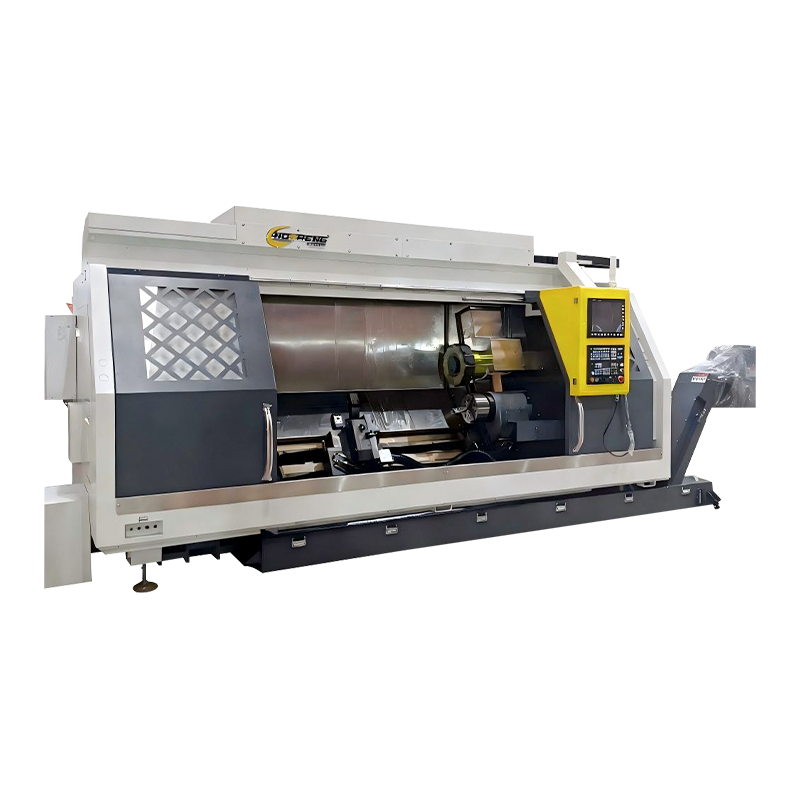
Understanding how composite turning and milling centers compare to traditional multi-machine processes can help manufacturers evaluate whether an upgrade makes sense for their production needs.
| Factor | Composite Turn-Mill Center | Separate Lathe and Mill |
| Setup Time | Single setup | Multiple setups required |
| Positional Accuracy | Very High | Dependent on re-fixturing accuracy |
| Floor Space Needed | Lower | Higher |
| Initial Equipment Cost | Higher | Lower per individual machine |
| Best Suited For | Complex, high-precision cylindrical parts | Simpler parts, lower production volumes |
Choosing the right cylinder turning and milling composite center involves evaluating several technical factors that affect both machine capability and long-term production value.
The number of spindles, along with whether the machine offers live tooling for milling operations directly on the turret, significantly affects the range of parts a composite center can produce without additional fixturing or manual intervention.
Machines with more axes and the ability to perform simultaneous turning and milling operations offer greater flexibility for complex part geometries, though they typically come with a higher price tag and require more advanced programming expertise to fully utilize.
A composite center's control system should support intuitive programming for both turning and milling operations, ideally with software that simplifies toolpath generation for complex, multi-operation parts and integrates smoothly with existing CAD/CAM workflows already in use at your facility.
Because a cylinder turning and milling composite center combines multiple complex mechanical systems into one machine, proper maintenance is essential to keep it running accurately and reliably over time. Regular calibration checks help ensure that both the turning spindle and milling axes maintain the tight tolerances these machines are designed to achieve, since even small alignment drift can compound across complex, multi-operation parts. Lubrication systems for ball screws, guideways, and spindle bearings should be monitored closely, as these composite machines often see more continuous operation than single-function equipment given their expanded capabilities. Keeping detailed maintenance logs and following the manufacturer's recommended service intervals helps catch potential issues early, protecting the significant investment these machines represent for a production facility.
For manufacturers regularly producing complex cylindrical parts that require both turning and milling operations, investing in a cylinder turning and milling composite center often delivers substantial returns through reduced setup time, improved part accuracy, and lower overall production costs. While the upfront investment is higher than purchasing separate lathe and milling equipment, the efficiency gains and quality improvements frequently justify the cost for shops handling precision components in automotive, aerospace, or oil and gas applications. Carefully evaluating your part complexity, production volume, and long-term growth plans will help determine whether a composite turning and milling center is the right strategic investment for your machining operation.

Copyright © Xuancheng Huzheng Machinery Trading Co., Ltd. Rights Reserved.