 English
 中文简体
中文简体 русский
 日本語
日本語
Home / Newsroom / Industry News / Small CNC Machine Tools: A Practical Guide to Types, Capabilities & How to Choose the Right One
Industry News
 Email: cnc88max@dingtalk.com
 Phone: +86-18021988367
Content
A small CNC machine tool is a computer-numerically controlled machining system that combines the precision and repeatability of industrial CNC technology in a compact, space-efficient form factor suitable for small workshops, prototyping labs, educational environments, and light production settings. The term covers a broad family of machines — including mini CNC milling machines, compact CNC lathes, desktop CNC routers, small CNC plasma cutters, and benchtop machining centers — all of which share the defining characteristic of being significantly smaller in footprint, weight, and working envelope than their full-size industrial counterparts.
The rise of small CNC machine tools over the past two decades has been driven by advances in servo motor technology, affordable CNC controller systems, and precision ball screw manufacturing — all of which have brought true industrial-grade motion control within reach of small businesses, independent machinists, engineering schools, and even serious hobbyists. A compact CNC machine that would have cost hundreds of thousands of dollars in the 1990s can now be purchased for a fraction of that, making precision machining accessible to a much wider audience than ever before. These machines are not toys or compromises — when properly specified and set up, they are capable of producing parts to tolerances of ±0.01mm or better, working in materials ranging from plastics and aluminum to hardened steel and titanium.
The category of small CNC machine tools is diverse, and the different machine types serve fundamentally different machining operations. Understanding which type of machine matches your intended work is the most important first step in the selection process.
A mini CNC milling machine uses a rotating cutting tool to remove material from a stationary workpiece, moving the spindle and table through two or three axes (X, Y, Z) under CNC control to produce flat surfaces, slots, pockets, contours, and complex three-dimensional profiles. Small CNC milling machines typically have table travels of 200–500mm in X and 100–300mm in Y, with spindle speeds ranging from 5,000 to 24,000 RPM depending on the machine's intended material range. Entry-level mini mills with cast iron or welded steel frames are well suited to aluminum, brass, and plastics, while higher-end compact machining centers with rigid box-section construction and direct-drive spindles can handle steel and stainless steel at reduced cutting depths.
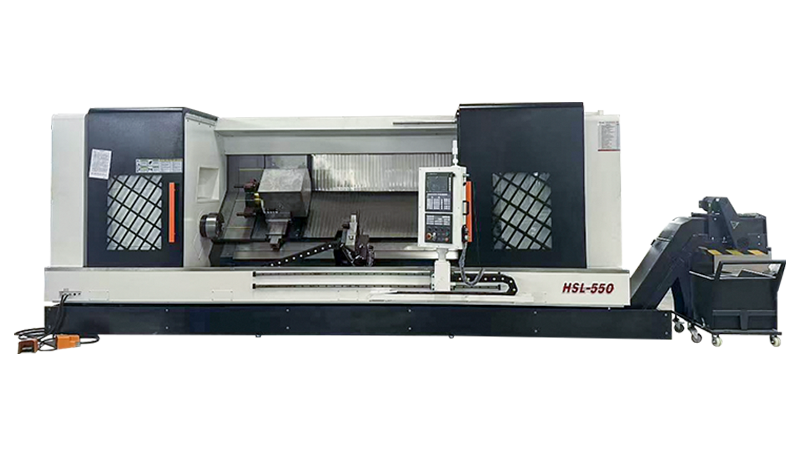
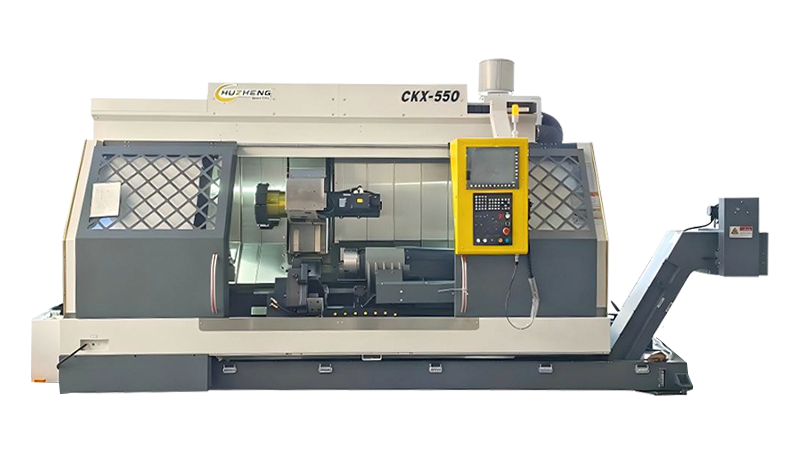
A small CNC lathe holds the workpiece in a rotating chuck and uses a stationary cutting tool mounted on a CNC-controlled carriage to produce cylindrical, tapered, threaded, and contoured turned parts. Compact CNC lathes are available in swing diameters from 150mm to 400mm, with between-centers distances of 250mm to 600mm in benchtop configurations. Many small CNC turning machines include a live tooling option — a secondary milling spindle mounted on the turret — that allows milling, drilling, and tapping operations to be performed on the same part without removing it from the chuck, making them highly versatile for complex turned components.
Desktop CNC routers use a high-speed rotating bit (router bit or end mill) mounted on a gantry-style moving bridge to cut, carve, and profile flat sheet materials — wood, MDF, foam, plastics, and thin aluminum sheet. Their working area is typically larger relative to their cost than CNC mills — a desktop router with a 600×900mm cutting bed is common at modest price points — but their lighter construction and lower spindle torque limit them to softer materials and shallower depths of cut compared to a rigid milling machine. Desktop CNC routers are extremely popular in sign making, furniture production, model making, and PCB milling applications.
A compact CNC machining center combines the functions of a milling machine with an automatic tool changer (ATC) — a carousel or umbrella-style magazine that holds multiple cutting tools and swaps them automatically under program control. This eliminates the need for manual tool changes during a machining cycle, dramatically reducing cycle times and enabling complex multi-operation parts to be produced in a single setup. Small machining centers with 8–20 tool capacity ATCs and working envelopes of 400×300×300mm are now available in footprints small enough to fit in a standard workshop bay, bridging the gap between benchtop mini mills and full-size production machining centers.
Small CNC plasma cutters and laser cutting machines use a CNC-controlled gantry to move a plasma torch or laser head over flat sheet material, cutting complex 2D profiles with high precision and speed. Compact plasma tables with cutting areas of 600×600mm to 1,200×2,400mm are widely used by small fabrication shops, artists, and prototype manufacturers working in mild steel, stainless steel, and aluminum sheet. Benchtop fiber laser cutters and CO₂ laser engravers cover a similar range of flat-sheet cutting and engraving applications, with the laser offering higher precision and the ability to cut non-metallic materials that plasma cannot process.
Machine specifications can be bewildering when you are comparing models from different manufacturers, especially when marketing language obscures the meaningful technical differences. These are the parameters that genuinely matter for day-to-day machining performance:
| Specification | What It Means | Why It Matters |
| Axis Travel (X/Y/Z) | Maximum distance each axis can move | Defines the maximum part size you can machine |
| Spindle Speed (RPM) | Rotational speed range of the cutting spindle | Determines suitable cutting speeds for different materials and tool diameters |
| Spindle Power (kW) | Motor power available at the spindle | Limits depth of cut and feed rate in hard materials |
| Positioning Accuracy | How closely the machine hits a programmed position | Directly affects dimensional accuracy of finished parts |
| Repeatability | Consistency of returning to the same position | Critical for batch production where parts must be identical |
| Table Load Capacity | Maximum workpiece weight the table supports | Limits the size and weight of fixtures and workpieces |
| Tool Holder Type | Spindle taper and tooling standard (BT30, BT40, ER collet, etc.) | Determines tooling availability, rigidity, and ATC compatibility |
| CNC Controller | The software/hardware system that interprets G-code and controls motion | Affects ease of use, CAM compatibility, and available features like probing |
One of the most common questions prospective buyers ask is what materials a compact CNC machine can realistically cut. The answer depends strongly on the machine's construction rigidity, spindle power, and axis drive system — not just the manufacturer's claims. Here is a practical guide to material capabilities across different machine categories:
The user base for desktop and mini CNC machines is surprisingly broad, spanning commercial manufacturing, research and development, education, and the maker community. Understanding how different users deploy these machines clarifies what features and performance levels are appropriate for each context.
Small machine shops and job shops use compact CNC machines to produce low-to-medium volume components where a full-size machining center would be cost-prohibitive or physically impractical. A small CNC lathe or mini machining center can produce precision turned and milled parts in aluminum, brass, and steel for industries including electronics, medical devices, automotive, and aerospace at tolerances that meet or exceed drawing requirements. For shops with limited floor space and capital, a well-specified compact CNC machine can generate significant revenue on the right type of work.
Engineering teams, industrial designers, and product development companies use small CNC machine tools to produce functional prototypes directly from CAD files in hours rather than weeks. A compact CNC mill or machining center can produce metal or plastic prototype parts that are dimensionally accurate and functionally testable — critical for validating designs before committing to expensive production tooling. The speed of in-house CNC prototyping compared to outsourcing is a major competitive advantage in fast-moving product development cycles.
Technical colleges, universities, vocational training centers, and high school engineering programs use small CNC machine tools extensively to teach CNC programming, CAD/CAM workflows, and machining fundamentals. Benchtop CNC mills and lathes with modern controllers allow students to learn G-code programming, toolpath generation, workholding, and cutting parameter selection on machines that are safe enough for educational environments, compact enough for classroom installation, and representative enough of industrial equipment to build transferable skills.
Jewelry manufacturers, watchmakers, and artisan craftspeople use ultra-compact CNC milling machines and engraving machines to produce intricate designs in precious metals, wax patterns for lost-wax casting, and custom engraving on finished pieces. Desktop CNC mills with high-speed spindles capable of 40,000–60,000 RPM and sub-millimeter tooling resolution are purpose-designed for this demanding application, where part sizes are tiny but dimensional accuracy and surface finish requirements are extremely stringent.
Desktop CNC routers are widely used for PCB isolation routing — the process of milling copper-clad boards to create circuit traces — as well as drilling component holes and cutting board outlines. CNC PCB milling produces prototype circuit boards in hours without the chemical etching processes required by traditional PCB fabrication, making it popular with electronics engineers, hardware startups, and research labs who need fast PCB iterations during development.
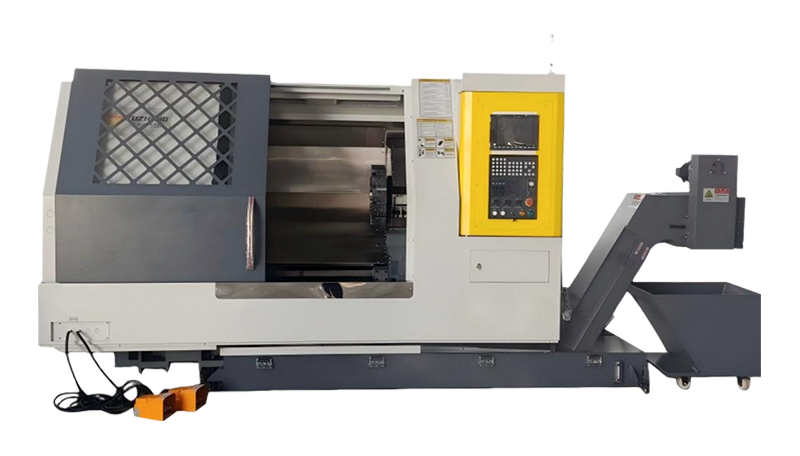
The CNC controller is the brain of the machine — it reads the G-code program, calculates the motion trajectories, sends commands to the servo or stepper motor drives, and manages all the machine's safety interlocks and I/O functions. The quality and capability of the controller has a major impact on the machine's ease of use, compatibility with CAM software, and ultimately the quality of the parts it produces.
Many affordable desktop CNC machines and small routers use open-source or low-cost PC-based controllers such as GRBL (running on Arduino hardware) or Mach3/Mach4 (running on a Windows PC via a motion control card). These systems are cost-effective and have large user communities, but they typically run on stepper motors rather than closed-loop servo systems, have limited look-ahead buffering that can cause hesitation on complex curves, and lack the advanced features — such as tool length measurement, workpiece probing, and adaptive feed rate control — found on professional controllers. They are entirely adequate for hobby use, wood routing, and light aluminum work.
Higher-end small CNC machine tools — particularly compact machining centers and precision mini mills from established manufacturers — are equipped with professional-grade proprietary controllers from brands such as Fanuc, Siemens 828D, Mitsubishi M80, or Syntec. These controllers run closed-loop servo systems that actively compensate for positioning errors, support advanced features such as high-speed machining (HSM) modes, automatic tool length measurement, workpiece coordinate probing, and rigid tapping, and are compatible with the G-code output of all mainstream CAM packages. A machine equipped with a Fanuc or Siemens controller is genuinely easier to program, more reliable in production, and significantly more capable in precision applications than an equivalent machine running a PC-based controller — but the controller itself contributes meaningfully to the machine's cost.
With such a wide range of machine types, price points, and capabilities available, the selection process requires an honest assessment of your actual requirements rather than buying the most capable or cheapest option. Working through these questions systematically will lead you to the right machine:
The compact CNC machine market contains many products at very different quality levels, and the consequences of a poor purchase decision can be felt for years. Equally, well-chosen machines are often underutilized or misused because operators make avoidable setup and programming errors. These are the most common pitfalls to watch for:
| Mistake | Why It Happens | How to Avoid It |
| Buying based on price alone | Low upfront cost seems attractive without considering quality | Evaluate rigidity, controller quality, and after-sales support alongside price |
| Underestimating rigidity requirements | Assuming any CNC mill can cut any material | Match machine construction to material hardness requirements before purchasing |
| Incorrect workholding setup | Rushing setup or using inadequate clamps | Invest in proper vises, step clamps, and fixture plates; never rush workholding |
| Using wrong cutting parameters | Copying parameters from full-size machines or guessing | Use speeds and feeds calculators and tooling manufacturer data for small-machine depth-of-cut adjustments |
| Neglecting machine maintenance | Assuming low-maintenance means no maintenance | Follow lubrication schedules for ballscrews and guideways; clean chip buildup regularly |
| Skipping post-processor verification | Assuming CAM output is always correct for the specific controller | Simulate every new program in the controller's built-in simulation or a G-code verification tool before running on the machine |
A small CNC machine tool is a precision instrument that requires consistent care to maintain its accuracy and extend its service life. Unlike manual machines where wear is more obvious and tolerances are less critical, CNC machine accuracy depends on the condition of ballscrews, linear guides, spindle bearings, and drive systems — all of which degrade gradually and silently if not maintained.

Copyright © Xuancheng Huzheng Machinery Trading Co., Ltd. Rights Reserved.