 English
 中文简体
中文简体 русский
 日本語
日本語
Home / Newsroom / Industry News / What Is a Shaft Turning and Milling Composite Center, and Does Your Shop Need One?
Industry News
 Email: cnc88max@dingtalk.com
 Phone: +86-18021988367
Content
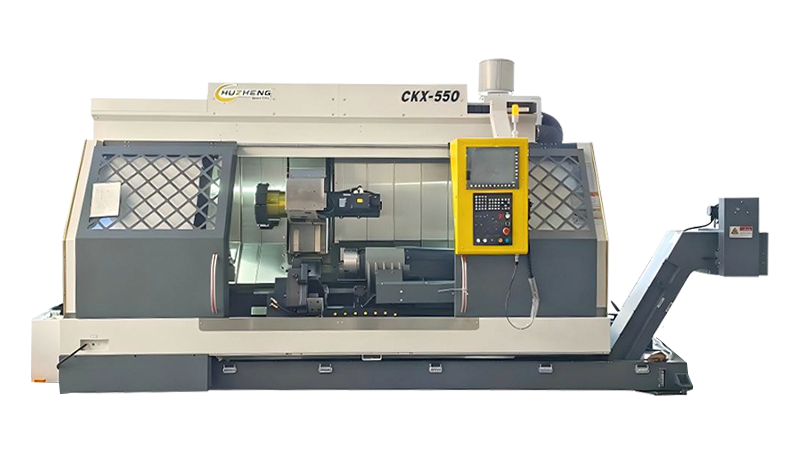
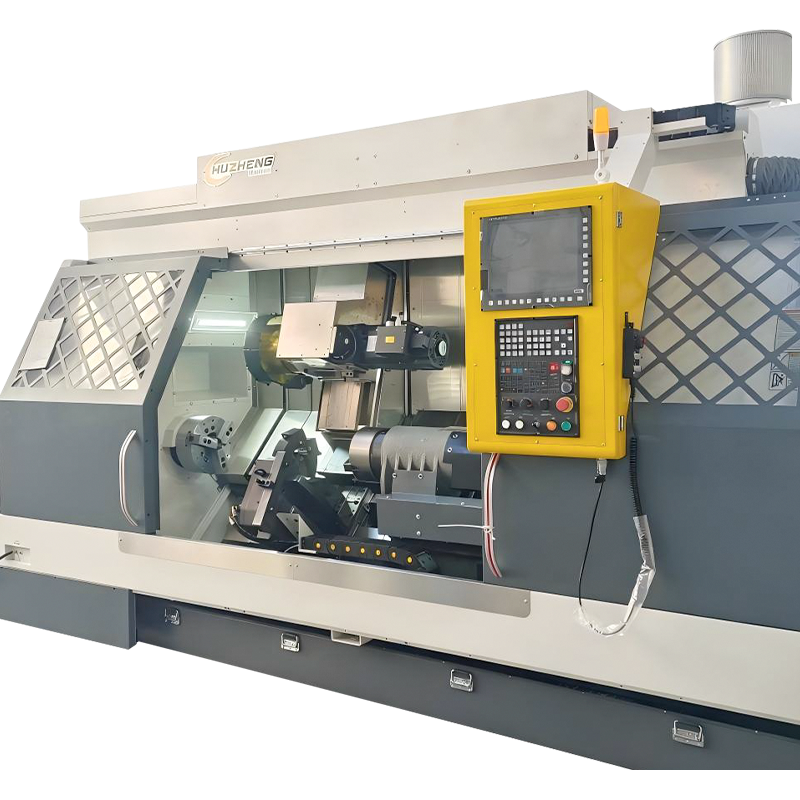
A shaft turning and milling composite center is a CNC machine tool built specifically to handle shaft-type parts that need both rotational and non-rotational features machined in a single setup. Shafts are fundamentally cylindrical, but real-world shaft components rarely stay that simple — they often need keyways, flats, cross-holes, or angled ports cut into them, on top of the turned diameters, tapers, and threads. A composite center combines a rotating spindle for turning operations with a powered milling head, letting both processes happen on the same machine without moving the part.
The traditional alternative — turning a shaft on a lathe, then transferring it to a separate milling machine for secondary features — introduces extra handling, extra setup time, and the risk of accumulated positioning error every time the part is re-clamped. A shaft turning and milling center eliminates that transfer entirely, machining the full part geometry in one clamping cycle.
Understanding how these two processes combine helps explain why composite centers are worth the investment for the right kind of production.
In the turning stage, the shaft rotates at high speed while a stationary cutting tool removes material to create the cylindrical diameters, tapers, grooves, and threads. This is the same fundamental process used on a standard CNC lathe, and it's what establishes the shaft's core dimensions and concentricity.
Once the cylindrical body is turned, the milling spindle engages to cut features that aren't symmetrical around the shaft's axis — keyways, flats, cross-drilled holes, or splines. On a composite center, this milling spindle typically moves along a C-axis (rotary indexing of the workpiece) and often a Y-axis as well, allowing off-center milling and drilling without needing to reposition the part.
Because both processes share the same clamping and reference point, features cut during milling stay perfectly aligned with the diameters and features cut during turning. This is especially valuable for parts where concentricity and positional accuracy between features directly affects how the shaft performs in its final application.
Shops that switch from a two-machine workflow to a shaft turning and milling composite center typically see benefits across several areas of production:
These gains compound over high-mix production runs, where the same machine needs to switch between different shaft geometries frequently without long changeover delays.
Shaft turning and milling composite centers are used heavily across industries where precision, rotational symmetry, and secondary machined features intersect. Common examples include:
| Industry | Typical Shaft Components |
| Automotive | Drive shafts, camshafts, transmission shafts |
| Aerospace | Turbine shafts, actuator components |
| Industrial Equipment | Pump shafts, gearbox input/output shafts, valve stems |
| Medical | Surgical instrument shafts, orthopedic implant components |
What these parts share in common is a cylindrical core geometry combined with features — keyways, cross-holes, flats, or splines — that require milling in precise relation to the turned surfaces.
A shaft turning and milling composite center isn't automatically the right choice for every shop or every part. Deciding whether it makes sense comes down to a few practical questions.
If milling operations account for a meaningful share of the total machining time — commonly cited around 30% or more — a composite center starts to pay for itself through reduced handling and setup time. If a shaft only needs a simple keyway or a single cross-hole, a turning center with a basic powered tool holder may be more cost-effective.
Shops running small batches of highly varied, complex shaft geometries benefit most from composite centers, since the reduction in re-fixturing time adds up quickly across frequent changeovers. For very high-volume production of simple shafts, a dedicated turning center paired with a bar feeder can often achieve a lower cost per part.
Composite centers demand more from tooling, CAM programming, and collision management than a standalone lathe or mill. Shops considering the switch should factor in whether they have the programming expertise and tooling supply chain to keep the machine running at its full capability, rather than using it as an expensive standard lathe.
When comparing shaft turning and milling composite centers from different manufacturers, a few specifications matter more than headline axis counts:
Matching these specifications to your actual shaft geometries — rather than choosing based on the most feature-rich model available — is what determines whether the machine delivers a genuine return on investment.

Copyright © Xuancheng Huzheng Machinery Trading Co., Ltd. Rights Reserved.