 English
 中文简体
中文简体 русский
 日本語
日本語
Home / Newsroom / Industry News / What Is a Turning and Milling Composite Center? A Simple Guide for Shop Owners
Industry News
 Email: cnc88max@dingtalk.com
 Phone: +86-18021988367
Content
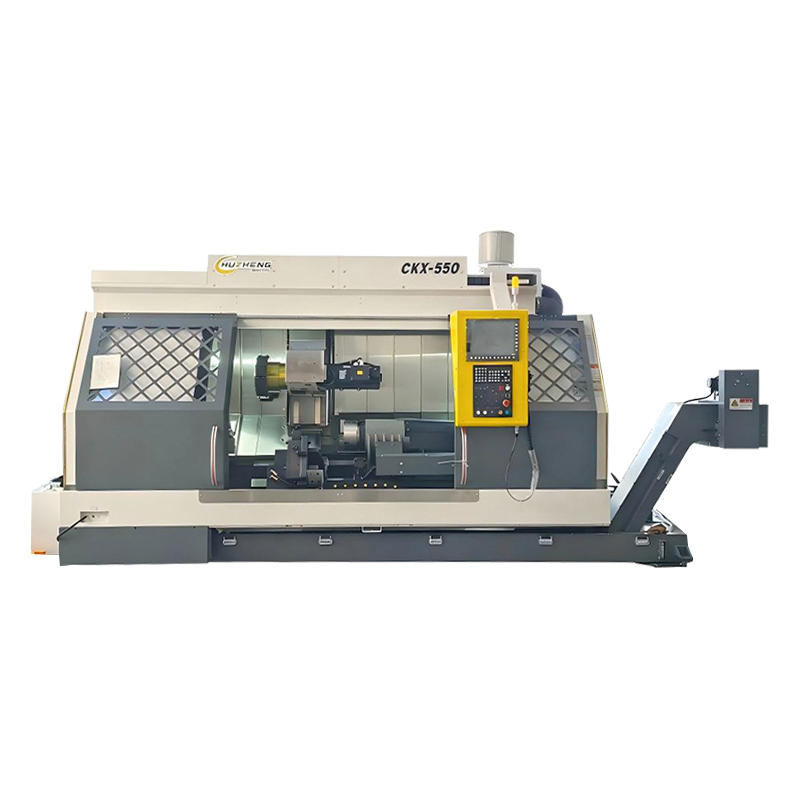
A turning and milling composite center is a single machine that combines the rotational cutting power of a lathe with the multi-axis precision of a milling machine. Instead of moving a part between two or three separate machines to finish it, the workpiece stays clamped in one spindle from start to finish. The machine turns, drills, mills, taps, and sometimes even grinds — all in one continuous cycle. For shops that make complex, multi-featured parts, this changes everything about how a job gets planned and run.
The name itself tells you the story: "turning" refers to the lathe-style rotation of the part against a cutting tool, while "milling" refers to a rotating tool cutting into a stationary or indexed part. A composite center does both, often at the same time, using live tooling, a sub-spindle, and multiple axes of motion (commonly X, Y, Z, plus C-axis rotation and sometimes a B-axis for tilting).
Traditionally, a complex part might travel through three or four machines: a lathe for the outer diameter, a mill for flats and holes, another setup for the back side, and maybe a manual deburring station in between. Every transfer between machines introduces two problems — lost time and lost accuracy. A turning and milling composite center solves both by keeping the part in one fixture throughout the entire process.
Here's a side-by-side look at how the two approaches typically compare on a mid-complexity part:
| Factor | Separate Lathe + Mill | Turning and Milling Composite Center |
| Number of setups | 2-4 | 1 |
| Positional accuracy between features | Depends on fixture repeatability | Held to single-setup tolerance |
| Cycle time per part | Longer, includes transfer time | Shorter, continuous cycle |
| Operator handling | High, manual transfers | Low, mostly unattended |
| Floor space needed | Larger footprint | Smaller, one machine |
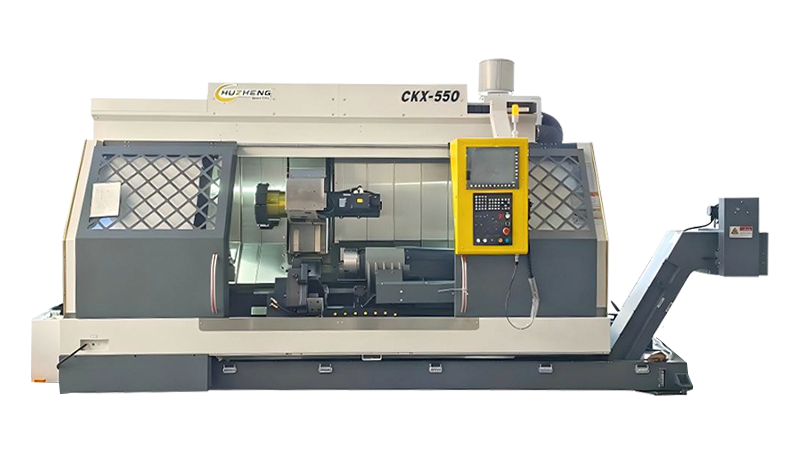
A turning and milling composite center looks complicated on the outside, but its capability comes down to a handful of key components working together. Understanding these helps when comparing machines from different builders.
The main spindle holds and rotates the workpiece for turning operations. Many composite centers also include a sub-spindle, which can grab the part after the first side is finished and rotate it so the back side can be machined without the operator ever touching the part. This is what allows true "done in one" part completion.
Live tooling refers to rotating tool holders in the turret that let a milling cutter or drill spin independently of the part. Combined with a C-axis (rotary control of the main spindle), this lets the machine cut flats, slots, cross-holes, and pockets at precise angular positions around the part.
Higher-end composite centers add a B-axis, which tilts the milling head, and Y-axis travel, which moves the tool off the centerline. Together these allow angled holes, complex 3D contours, and off-center features to be cut without repositioning the part — something a basic lathe simply cannot do.
The theory sounds good, but what actually changes on the shop floor once a turning and milling composite center is running production? A few benefits show up consistently across industries.
Not every part justifies the cost of a composite machine, but for the right geometry, the payback can be fast. Parts with turned features on one axis and milled features elsewhere on the same part are the classic candidates.
These machines represent a significant investment, so it pays to evaluate a few practical points before signing off on a purchase rather than just comparing spec sheets.
A machine with a B-axis and full live tooling sounds impressive, but if your parts are simple shafts, you may be paying for capability you'll never use. Review your part drawings first and identify which features truly require simultaneous turning and milling.
Programming a composite center is more involved than programming a standalone lathe or mill because the toolpath has to account for both turning and milling operations in sequence. Check whether the control offers simulation, collision checking, and CAM software support that your programmers already know or can learn quickly.
Live tooling, sub-spindle chucks, and rotary tool holders all add ongoing cost beyond the machine price. Ask the builder for a realistic estimate of tooling spend for your first year, and check how accessible service and spare parts are in your region.
Even a well-chosen turning and milling composite center can underperform if it's used the wrong way. A few mistakes come up again and again on shop floors.
The honest answer depends on part complexity and volume. If your shop regularly runs parts that need both turned and milled features, and precision between those features matters, the investment usually pays for itself through reduced setups, fewer rejects, and faster turnaround. If most of your work is simple turned parts with no secondary milling, a standalone lathe may still be the more economical choice. The best approach is to pull your last twelve months of job data, identify how many parts required multiple machines, and calculate the real hours lost to transfers and re-fixturing before making the call.

Copyright © Xuancheng Huzheng Machinery Trading Co., Ltd. Rights Reserved.