
 English
 中文简体
 русский
 日本語
Home / Newsroom / Industry News / Custom High-Speed CNC Cutting Machines: Building Speed Around Your Part
Industry News
 Email: cnc88max@dingtalk.com
 Phone: +86-18021988367
A high-speed machine that fights your part geometry is an expensive way to make scrap. In most of the shops we visit, the conversation about a custom high-speed CNC cutting machine starts the same way: a cycle time that has stopped improving, a part family that keeps growing, and a second operation that quietly eats an hour out of every shift. Nobody opens with spindle rpm. They open with a bottleneck.
That is the right place to start. Speed is only useful when it survives contact with real material, real tolerances and a real operator on the second shift. This guide walks through what "high-speed" actually delivers on a cutting machine, where custom configuration changes the outcome, and how to prepare a specification that a builder can answer honestly.
Content
Spindle speed gets the headline, and it does matter — a spindle that reaches higher rpm with low vibration lets you run smaller tools, lighter passes and finer surface finishes. But a machine only earns the label when everything behind the spindle keeps up. Acceleration and deceleration of the axes decide how much of the toolpath is spent at cutting feed rather than ramping. Feed drives have to hold position at speed without sacrificing the tolerance you promised. The control needs enough look-ahead to smooth the corners instead of hammering them. And thermal behaviour has to stay predictable, because a machine that grows two hundredths over a long shift will eventually cost you a rework lot.
A catalogue machine is designed around an average part that does not exist in your shop. Custom configuration is simply the process of moving the design decisions until they match what you actually cut. That can mean the work envelope and maximum swing, whether the machine carries one spindle or two, how many axes you need, how many tool stations, whether live tooling is fixed or driven, whether you want through-spindle coolant, and how parts arrive and leave — bar feeder, gantry loader, robot cell or a person with a hoist.
It also covers the unglamorous details that decide whether a machine feels fast or slow on the floor: chip conveyor layout, coolant tank volume, the height of the control pendant, the way a fixture locates, and whether probing is built into the cycle or bolted on afterwards. Every one of those is a choice, and every choice is cheaper to make before the casting is machined.
The best custom builds are conservative. They borrow proven structural elements and change only what the part demands. That keeps spare-part commonality high and commissioning short. When a builder offers a standard platform with a configurable variant beside it, the configurable one is usually where a serious part family lands.
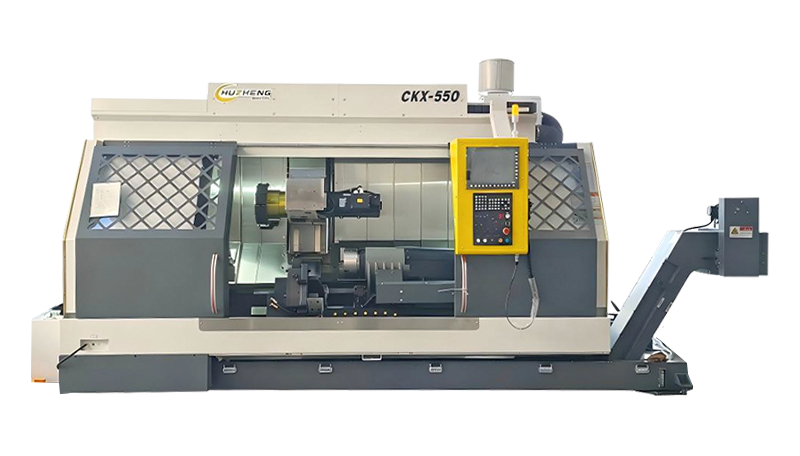 CKX Series Customizable Dual-Spindle Turning and Milling MachineConfigurable dual-spindle turning and milling platform positioned alongside standard CKD and heavy-duty HSL models for adaptable part-family work.View Product →
Most high-speed cutting requirements resolve into a handful of architectures. The table below is a starting map, not a specification — the right answer depends on your part drawing, your tolerance stack and your volume.
| Configuration | Typical fit | What to verify |
|---|---|---|
| Single-spindle turn-mill | Mixed batches with moderate complexity | Tool station count, live tool speed, changeover time |
| Dual-spindle turn-mill | Parts needing both ends machined in one setup | Synchro accuracy between spindles, part transfer logic |
| Five-axis milling and turning | Angled features, complex geometry, tight true position | Kinematic accuracy, collision avoidance, verification tools |
| Heavy-duty configuration | Large or heavy rotational workpieces | Bed mass, guideway load rating, spindle torque at low rpm |
| Bore and cylinder-focused build | Housings, bores and internal features in one clamp | Reach into the bore, boring bar clearance, coolant delivery |
The fastest way to narrow a shortlist is to describe parts, not machines. A few patterns come up again and again.
If your heaviest parts are also your highest-value parts, it is worth looking at a heavy-duty platform before optimising the light work. Downtime on a large workpiece is measured in days, not minutes.
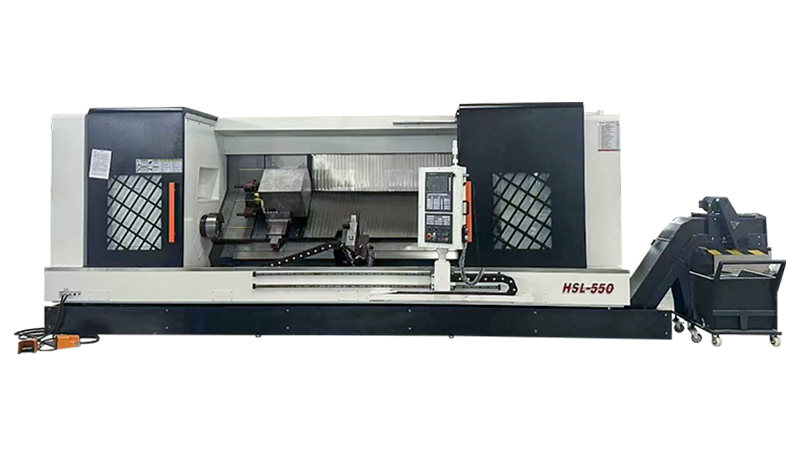 HSL Series Heavy-Duty Dual-Spindle Turning and Milling MachineHeavy-duty dual-spindle turn-mill platform for high-value large workpieces where downtime is costly and a custom heavy-duty configuration may be worth reviewing.View Product →
Builders can only be as precise as your input. Bring these to the first conversation and you will get a real proposal rather than a brochure.
If you are still comparing architectures, the overview of high-speed CNC cutting machine options is a useful next read before you settle on an envelope.
Two shops can buy the same machine and get cycle times forty percent apart. The difference is rarely the iron. It is the tooling grade and the holder runout, the coolant concentration and how it is directed, the clamping method and how repeatable it is, and whether the CAM programmer is generating toolpaths that suit the control. A machine that reaches higher rpm with a poorly balanced holder will simply chatter faster.
This is where multi-operation capability earns its keep. When turning, milling, drilling and tapping happen in a single clamp, the savings compound: less handling, fewer fixtures, less work in progress, and fewer chances for a datum to drift. It is worth reviewing multi-process composite machining early, because the process plan you choose will constrain the machine you can buy.
There is a practical advantage to buying from a company that builds one family of machines rather than a catalogue of everything. Xuancheng Huzheng Machinery has spent its resources on turning and milling composite technology, which means the engineers answering your questions are the same people who specify the spindles and the same people who hear about it when something fails in the field. The company describes its quality system as covering the full chain — casting, assembly, finished machine and after-sales — and keeps a dedicated spare-parts stock and technical support team for that single product line. We would not ask you to take that on faith; ask for a factory visit and see how the assembly area is run.
For shops with a stable, well-understood part family and predictable volumes, a standard platform is often the most economical route and leaves budget for tooling and fixturing.
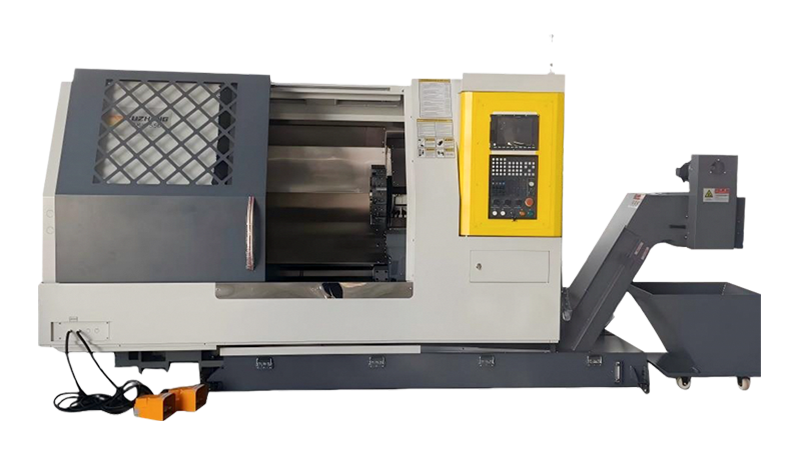 CKD Series Standard Dual-Spindle Turning and Milling MachineStandard dual-spindle turn-mill center for stable, predictable part families, integrating turning, milling, drilling, tapping and contour work in one setup.View Product →
Choosing a custom high-speed CNC cutting machine is really a specification exercise, not a shopping exercise. Describe the parts honestly, include the awkward one at the back of the drawer, and be clear about where the current process loses time. A builder who asks about your fixtures, your coolant and your operators is probably the one who will still answer the phone two years after delivery. That, more than any rpm figure, is what keeps a fast machine productive.

Copyright © Xuancheng Huzheng Machinery Trading Co., Ltd. Rights Reserved.

